
“What Brand Is It?” — Why That’s the Wrong Question to Ask About Engine Oil
If you’ve spent any time around race tracks, workshops, or performance events, you’ve probably heard it — or asked it yourself:
“Yeah, but what brand is it?”
After all these years, it’s still one of those questions we get at KCK Lubricants.
And every time, we have to pause — not because it’s a bad question, but because it’s the wrong starting point.
This blog exists for the people who are curious enough to go a step deeper. The ones who want to understand why some oils protect better, last longer, and survive conditions others simply don’t.
If that’s you, read on.
Why We’re Conditioned to Think in Brands
For decades, engine oil has been sold as a label-first product.
Big logos. Big claims. Bigger sponsorships.
The implication is simple: the brand equals the quality.
That works fine at the supermarket level — but it falls apart very quickly once you move into:
-
Motorsport
-
High-performance engines
-
Vintage or rare restorations
-
High-load gear-driven or flat-tappet applications
At that level, engines don’t care who sponsored what.
They care about chemistry, physics, and consistency.
What People Are Really Asking When They Say “What Brand Is It?”
When someone asks about the brand, they’re usually trying to answer a few deeper questions:
-
Can I trust it?
-
Is it better than what I’m using?
-
Will it protect my engine?
-
Is it proven?
All valid questions — but none of them are answered by a sticker.
They’re answered by what’s inside the bottle and how it got there.
How Most Engine Oil Brands Actually Work
Here’s the uncomfortable truth most of the industry doesn’t like to talk about.
The majority of oil brands:
-
Do not formulate their own oils
-
Do not manufacture their own oils
-
Do not control the chemistry beyond a specification sheet
Instead, they:
-
Buy off-the-shelf base oils
-
Use pre-packaged additive systems
-
Blend to meet a price point or marketing position
There’s nothing illegal or unethical about this — but it means the brand is doing most of the work, not the formulation.
Which is fine… until you start asking more of the oil than the average commuter ever will.
Why KCK Is Harder to Explain (But Easier to Trust)
KCK Lubricants exists because we took the long road.
We don’t build oils around marketing narratives.
We build them around applications, loads, temperatures, and failure modes.
That means:
-
Selecting base oils for specific roles, not generic use
-
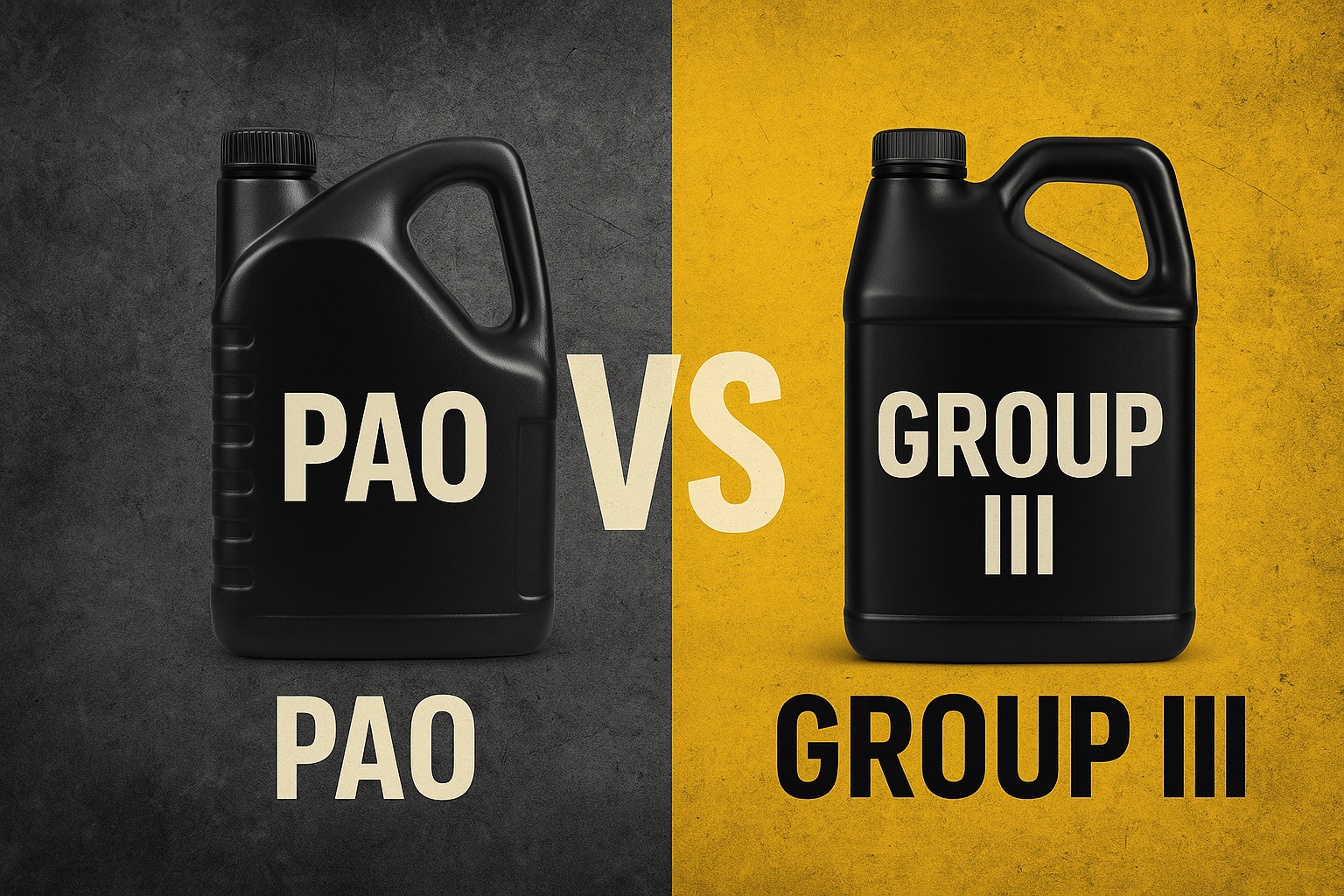
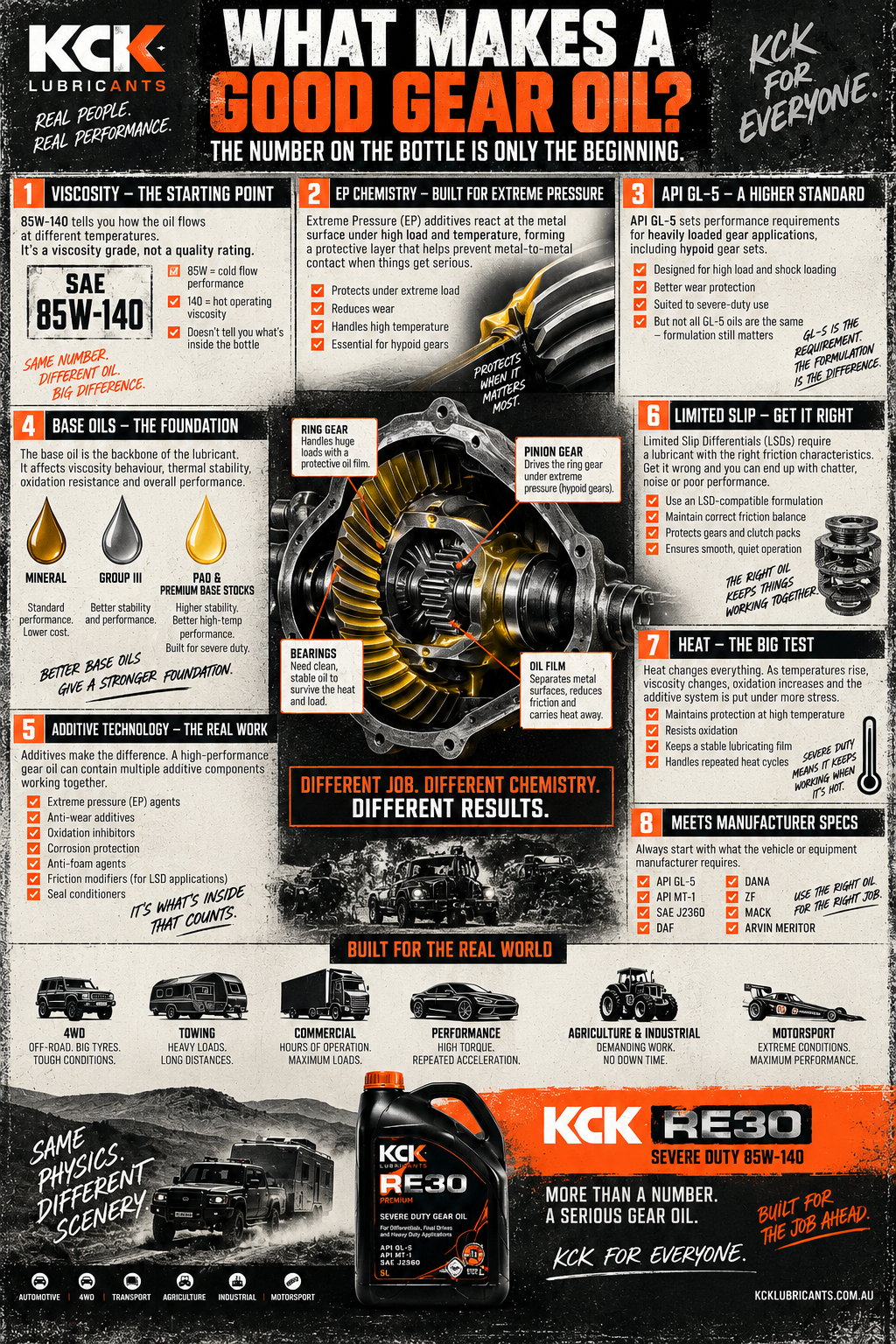
Using PAO, Ester, and supporting base stocks where they actually make sense
-
Designing additive chemistry for real-world stress, not lab-only compliance
-
Hot blending to ensure proper additive solubility and stability
-
Blending by weight, not volume, so temperature never skews accuracy
In short: we manufacture oil at a component level.
That’s also why it’s impossible to explain KCK in a 10-second trackside chat.
Why Serious Builders Don’t Lead With Brand
Spend enough time around engine builders, gearbox builders, and race teams and you’ll notice something interesting:
They stop asking about brands very early on.
Instead, the questions become:
-
What’s the base oil makeup?
-
What’s the zinc and anti-wear content?
-
How stable is it at sustained temperature?
-
How does it hold film under shock load?
-
What does the oil look like after real use?
These people have seen what happens when oil fails.
They don’t care about marketing — they care about margins of safety.
That’s the language KCK speaks, because that’s the environment we come from.
Why This Matters for Performance, Longevity, and Trust
When oil is designed properly:
-
Bearings live longer
-
Gear drives quieten down
-
Flat tappets survive
-
Oil pressure stabilises
-
Wear metals stay under control
And just as importantly — the oil behaves consistently, not just when it’s fresh out of the bottle.
That consistency only comes from:
-
Quality base stocks
-
Correct additive balance
-
Accurate blending
-
And experience gained the hard way
Not from branding.
So… What Brand Is It?
If you really need a name, it’s KCK Lubricants.
But if you’re asking the deeper question — the one that actually matters — here’s the honest answer:
KCK isn’t a brand-first oil.
It’s a formulation-first, application-driven lubricant, built by people who live in pit lanes, workshops, and test sessions — not boardrooms.
And if this explanation feels like too much detail?
That’s okay.
KCK probably isn’t for you.
But if it makes you lean in, ask more questions, and want to understand why things work?
Welcome.
You’re exactly who we built it for.
Why We’re Comfortable Saying This Out Loud
Some brands hide behind marketing because they have to.
We don’t.
Because when you manufacture oil at a component level, transparency isn’t a risk — it’s an advantage.
And once you understand how oil really works, you’ll never ask “what brand is it?” the same way again.