
The Ultimate Guide to Engine Oil
What It Does, Why It Matters, and How to Choose the Right Oil
What Does Engine Oil Actually Do?
Most people think engine oil just reduces friction. That’s only part of the story. Modern engine oil performs multiple critical functions simultaneously to protect engines and maintain performance.
Engine oil is far more than a lubricant. It cools components, suspends contaminants, prevents corrosion, and maintains a protective film between moving engine parts.
Without properly functioning oil, engines suffer accelerated wear, overheating, and catastrophic failure.
The Five Critical Jobs of Engine Oil
1. Lubrication
Oil creates a thin protective film between metal surfaces like crankshafts, camshafts, and pistons. This reduces friction, heat, and wear — essential for engine longevity.
2. Cooling
While the cooling system manages most engine heat, oil carries heat from areas coolant can’t reach:
-
Pistons
-
Bearings
-
Camshafts
-
Turbochargers
High-performance engines can exceed 120–140°C, making oil thermal stability vital.
3. Cleaning
Oil contains detergent and dispersant additives that keep contaminants suspended:
-
Soot
-
Carbon
-
Fuel residues
-
Microscopic metal particles
Did you know? Dark oil often indicates it’s doing its job by suspending contaminants.
4. Corrosion Protection
Acids and moisture from combustion can corrode engine parts. Oil additives neutralize acids and prevent rust. Total Base Number (TBN) measures how effectively an oil does this.
5. Sealing
Oil helps seal the gap between piston rings and cylinder walls, improving compression, efficiency, and reducing blow-by gases.
What Engine Oil Is Made Of
Base Oil
Base oil forms 70–90% of the final product. Quality base oils provide:
-
Thermal stability
-
Oxidation resistance
-
Low volatility
Base oil types include:
| Group | Description |
|---|---|
| I | Solvent-refined mineral oil |
| II | Hydrotreated mineral oil |
| III | Highly refined synthetic |
| IV | PAO synthetic |
| V | Specialty synthetics (esters, bio-oils) |
Additive Package
Additives make up 10–30% of oil and enhance performance:
-
Detergents
-
Dispersants
-
Anti-wear agents
-
Friction modifiers
-
Antioxidants
-
Anti-foam agents
Modern engine oils are complex chemical systems designed to balance lubrication, cleaning, cooling, and wear protection simultaneously.
Adding aftermarket additives can disrupt this balance, reducing oil effectiveness.
Understanding Engine Oil Viscosity
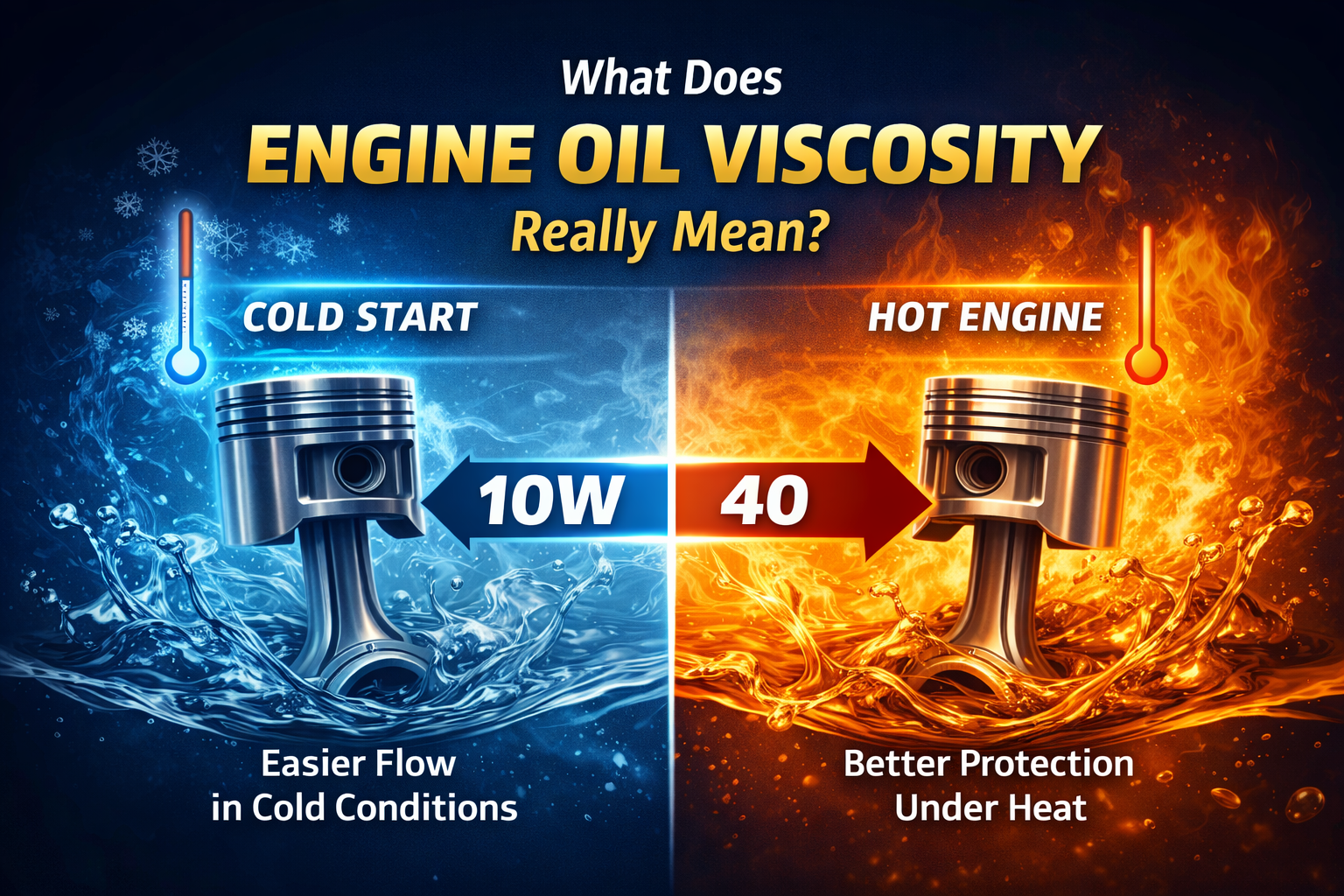
Viscosity is how thick or thin oil is at different temperatures.
Example: 10W-40
-
10W = cold-start flow
-
40 = operating temperature viscosity
Lower numbers flow faster in cold; higher numbers maintain protection under heat. Correct viscosity ensures the oil protects critical components under all conditions.
Why Oil Quality Matters
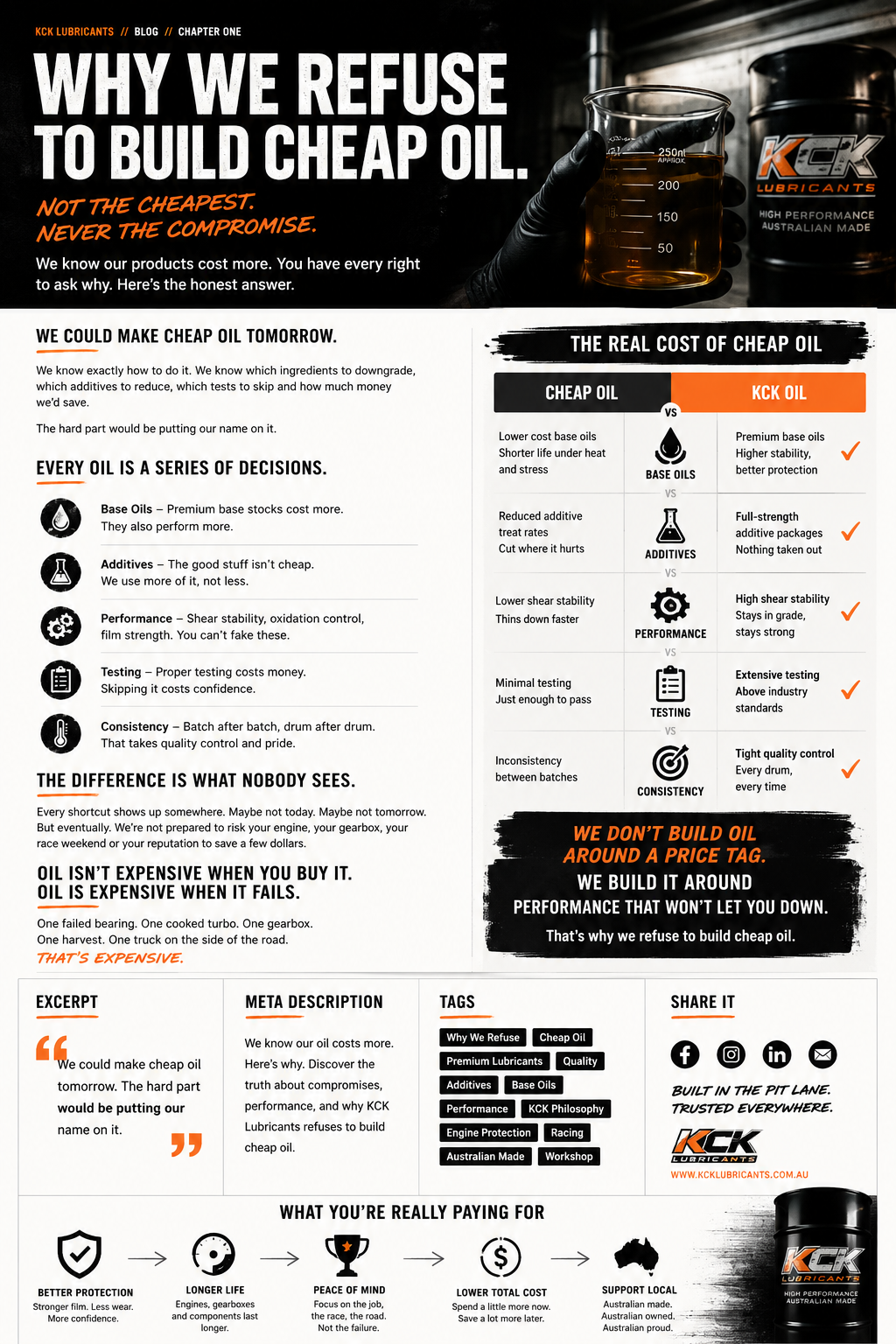
Not all oils are equal. Quality depends on base oil and additive synergy.
High-quality oils offer:
-
Superior wear protection
-
Thermal stability under extreme stress
-
Reduced deposits and sludge
-
Longer service life
Oil quality is determined by both the base oil and additive system working together under extreme temperature and pressure.
This is why motorsport, diesel fleets, and heavy-duty applications rely on premium formulations.
Synthetic vs Conventional Oil
Conventional Oil: Derived directly from crude. Reliable, but may degrade faster under stress.
Synthetic Oil: Engineered for high performance, providing:
-
Greater heat resistance
-
Improved cold-start lubrication
-
Longer life
-
Oxidation stability
Recommended for turbocharged engines, high-performance vehicles, extreme temperatures, or extended drain intervals.
Oil Myths That Can Damage Engines
Myth: Thicker oil always protects better
Truth: Too thick restricts flow during cold starts. Engines are designed for specific viscosities.
Myth: Oil additives improve protection
Truth: Modern oils already contain balanced additives. Extra additives can disrupt performance.
Myth: Oil is bad if it turns black
Truth: Dark oil often means the detergent package is doing its job.
How to Choose the Right Engine Oil
-
Follow manufacturer specifications – always check the recommended viscosity and classification.
-
Consider operating conditions – towing, motorsport, and extreme temperatures require high-performance oil.
-
Check engine type – turbocharged, diesel, and high-RPM engines need specialized formulations.
Pro tip: Always match viscosity to the manufacturer’s recommendation to ensure optimal protection.
Signs Engine Oil Needs Changing
-
Increased engine noise
-
Reduced fuel efficiency
-
Rapid oil level drop
-
Dark or contaminated oil
-
Burning smell
Regular oil changes are critical for maintaining performance and engine longevity.
Why High-Performance Engines Need Better Oil
Performance engines operate under extreme heat, load, and RPM. High-quality oils provide:
-
Shear resistance
-
Deposit control
-
Thermal stability
-
Wear protection
Professional teams rely on specialty lubricants for reliability under these conditions.
10 Engine Oil Mistakes That Destroy Engines
-
Using oil with incorrect viscosity
-
Ignoring manufacturer specifications
-
Extending oil changes too long
-
Adding aftermarket additives to modern oils
-
Using low-quality base oils in high-stress applications
-
Overlooking high-performance demands
-
Ignoring diesel soot management
-
Using conventional oil in turbo engines
-
Not checking oil condition regularly
-
Using oils without proper additive packages
Avoid these, and your engine will thank you.
Engine Oil FAQ
Why does engine oil turn black?
Suspends soot and combustion byproducts — a sign the oil is cleaning the engine.
Is synthetic oil better than mineral oil?
Yes — better thermal stability, oxidation resistance, and viscosity control.
What happens if oil viscosity is too low?
Insufficient lubrication film increases wear risk.
Is thicker oil better?
Not necessarily — can reduce flow and cold-start protection.
How often should oil be changed?
Depends on engine design, driving conditions, and oil quality.
Can synthetic and conventional oils mix?
Yes, but mixing may reduce performance advantages.
What causes oil to degrade?
Heat, oxidation, contamination, and mechanical shear.
Why do turbo engines require high-quality oil?
Extreme temperatures and speed demand superior lubrication and protection.
Does expensive oil make a difference?
Yes — higher-quality oils provide stronger protection and longevity.
About the Author
Matt Gilmour – Founder of KCK Lubricants
25+ years developing high-performance lubricants for motorsport, diesel, and heavy-duty engines. Dedicated to advancing lubrication technology and helping drivers make informed oil choices.
Internal Linking
Previous articles:
Week 1
Ultimate Guide to Engine Oil
Week 2
What Does Oil Viscosity Mean
Week 3
Synthetic vs Mineral Oil
Week 4
Why Engine Oil Turns Black
Week 5
Why Cheap Oil Costs More
Week 6
Diesel Engine Oil Specifications
Week 8
Why Engine Oil Breaks Down Over Time
Week 9
How Often Should You Change Your Engine Oil?
Week 10