
Why Nitro & Methanol Engines Destroy Ordinary Oil (And What Serious Racers Do About It)
When people talk about engine failures in high-horsepower race engines, the conversation usually revolves around pistons, rods, bearings, cylinder pressure, boost, fuel systems, or ignition timing.
But there’s another component fighting for survival every single pass.
The oil.
And if you're running Nitro-Methane, Methanol, Alcohol, or any extreme competition engine, your oil is operating in an environment most lubricants were never designed to survive.
This isn't theory.
It's the reality faced by drag racers, burnout competitors, drag boat racers, tractor pullers, blown alcohol racers, and high-horsepower engine builders every weekend.
The problem is simple:
Nitro and Methanol destroy ordinary oil.
Why Nitro & Methanol Are So Hard On Engine Oil
Petrol-powered street engines and competition engines live very different lives.
A typical street car may spend most of its life cruising, idling, and operating under relatively stable conditions.
A Nitro or Methanol race engine experiences the exact opposite.
Massive cylinder pressure.
Extreme combustion temperatures.
Violent RPM acceleration.
Huge bearing loads.
Aggressive clutch shock.
Constant fuel contamination.
The result is an environment where oil isn't simply lubricating.
It's fighting for survival.
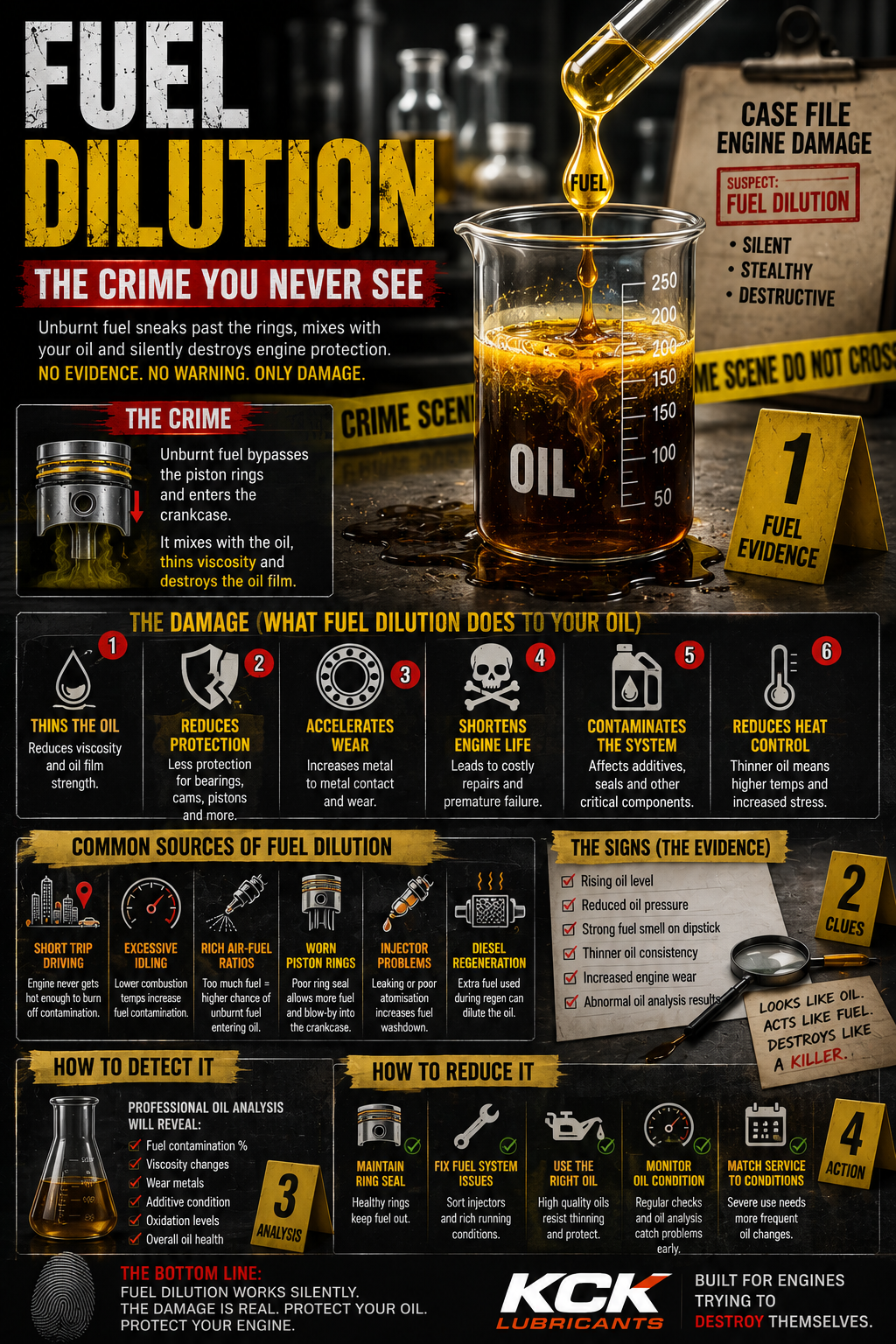
Fuel Dilution: The Silent Killer
Ask almost any experienced Nitro or Methanol racer what kills engine oil and you'll hear the same answer.
Fuel dilution.
During combustion, a portion of the fuel inevitably finds its way past the piston rings and into the crankcase.
In a petrol engine, this can be manageable.
In Nitro-Methane and Methanol applications, the problem becomes significantly more severe.
These fuels can wash cylinder walls, contaminate oil, reduce viscosity and weaken the protective film that separates expensive engine components.
When viscosity drops, so does protection.
Bearings suffer.
Camshafts suffer.
Lifters suffer.
Piston skirts suffer.
And suddenly an oil that looked perfectly acceptable in the drum is no longer capable of protecting a race engine operating on the edge.
Why Viscosity Matters More Than Most Racers Realise
Engine oil has one critical job:
Keep metal separated from metal.
That protective oil film is often the only thing standing between a healthy race engine and catastrophic damage.
When fuel contamination attacks viscosity, that protective film becomes thinner.
Under extreme load conditions, thinner oil films can mean:
• Reduced bearing protection
• Increased wear
• Higher operating temperatures
• Reduced oil pressure
• Accelerated component fatigue
In Nitro and Methanol applications, maintaining viscosity isn't just important.
It's everything.
The Brutal Reality Of Cylinder Pressure
Modern race engines are producing power levels that would have been considered impossible only a few decades ago.
Blown alcohol engines.
Nitro-Methane drag cars.
High-boost methanol combinations.
Tractor pullers.
Competition drag boats.
Extreme burnout cars.
Many of these engines generate cylinder pressures that place enormous stress on lubrication systems.
Every combustion event attempts to squeeze and shear the oil film protecting critical engine components.
The stronger and more stable that film remains, the better the engine's chances of surviving repeated punishment.
Shear: The Enemy Most People Never See
While fuel dilution receives much of the attention, another enemy is quietly attacking engine oil at the same time.
Mechanical shear.
High RPM operation, aggressive valvetrain loads, gear drives, superchargers and extreme bearing loads all place enormous mechanical stress on lubricant molecules.
Over time, weaker oils can lose viscosity through shear degradation.
The result?
The oil becomes thinner.
Protection decreases.
Wear increases.
The engine pays the price.
Why Many Race Oils Were Never Designed For This Environment
Here's an uncomfortable truth.
Many products marketed as "race oils" were never specifically developed for Nitro-Methane or Methanol applications.
They're often adapted from existing performance formulations designed for broader use.
And while those products may perform well in many environments, Nitro and Methanol racing introduce challenges that require a different approach.
Fuel dilution.
Extreme film strength requirements.
Exceptional shear stability.
Specialized additive chemistry.
These are not normal operating conditions.
And they shouldn't be treated as normal lubrication problems.
Where Else Do These Challenges Exist?
While Nitro drag racing is the most obvious example, similar lubrication challenges appear across numerous forms of motorsport and competition machinery.
Including:
Drag Racing
Top Fuel, Funny Car, Pro Mod, Outlaw and Alcohol classes all place extraordinary stress on lubricants.
Burnout Cars
Long periods at extreme RPM with significant heat generation and fuel contamination can punish engine oil rapidly.
Drag Boats
Continuous high load operation creates severe thermal and mechanical stress on lubrication systems.
Drag Bikes
High RPM, high power-density engines require stable oil films under intense load.
Tractor Pulling
Massive cylinder pressure and sustained heavy load create conditions where lubrication quality becomes critical.
Blown Alcohol Engines
Perhaps one of the toughest environments for fuel dilution and viscosity control.
The common thread?
Extreme mechanical stress.
Extreme fuel contamination.
Extreme consequences when lubrication fails.
What Serious Racers Look For In An Oil
When racers understand the challenges involved, the conversation changes.
The focus shifts from marketing claims to engineering priorities.
They look for:
• Strong base oil technology
• Fuel dilution resistance
• Shear stability
• High film strength
• Thermal stability
• Robust anti-wear chemistry
• Real-world performance under competition conditions
Because when an engine is worth tens of thousands of dollars, lubrication decisions become significantly more important.
Why KCK Developed NITRO
For years we watched racers face the same challenges.
Fuel dilution.
Viscosity loss.
Reduced protection.
Expensive lessons.
And honestly, we became frustrated with compromise.
Not because the industry lacked effort.
Because Nitro and Methanol applications create problems that demand specialized solutions.
So we spent years developing a purpose-built formulation specifically for these environments.
Not adapted.
Not repackaged.
Built from the ground up.
A dedicated PAO/Ester synthetic racing oil engineered to maintain film strength, resist fuel dilution, withstand extreme shear forces and survive the punishment associated with Nitro-Methane and Methanol racing.
Because when engines are trying to destroy themselves, ordinary oil simply isn't enough.
Frequently Asked Questions
Why does Nitro-Methane contaminate engine oil?
Nitro-Methane can bypass piston rings during combustion and enter the crankcase, where it dilutes the engine oil and reduces viscosity.
Is Methanol harder on oil than petrol?
Yes. Methanol can contribute to increased fuel dilution and cylinder wall wash compared to conventional petrol applications.
What causes race oil to go thin?
Fuel dilution, thermal stress and mechanical shear can all reduce oil viscosity over time.
What oil should be used in Nitro or Methanol engines?
Engines operating on Nitro-Methane or Methanol benefit from lubricants specifically designed to handle fuel dilution, shear stress and extreme load conditions.
Why is viscosity so important in racing engines?
Viscosity determines the thickness of the protective oil film separating moving engine components. Maintaining viscosity is critical to bearing, camshaft and valvetrain protection.
Final Thoughts
Nitro and Methanol racing represent some of the harshest environments any lubricant will ever experience.
Fuel dilution.
Shear.
Heat.
Cylinder pressure.
Mechanical violence.
These are not normal operating conditions.
And they demand more than ordinary lubrication solutions.
Because when you're pushing machinery beyond what most people consider possible, every component matters.
Including the oil.