
How Often Should You Change Your Engine Oil?
Engine oil plays a critical role in protecting internal engine components from friction, heat, and contamination. However, even the highest quality oil gradually degrades as it performs these tasks.
Understanding how often to change your engine oil is essential for maintaining engine reliability, performance, and longevity.
While oil change intervals have evolved significantly over the past few decades, many drivers are still following outdated advice that may no longer apply to modern engines or modern lubricants.
Why Oil Changes Are Necessary
Engine oil performs several important functions inside the engine:
-
Lubricating moving parts
-
Reducing friction and wear
-
Cooling engine components
-
Cleaning and suspending contaminants
-
Protecting against corrosion
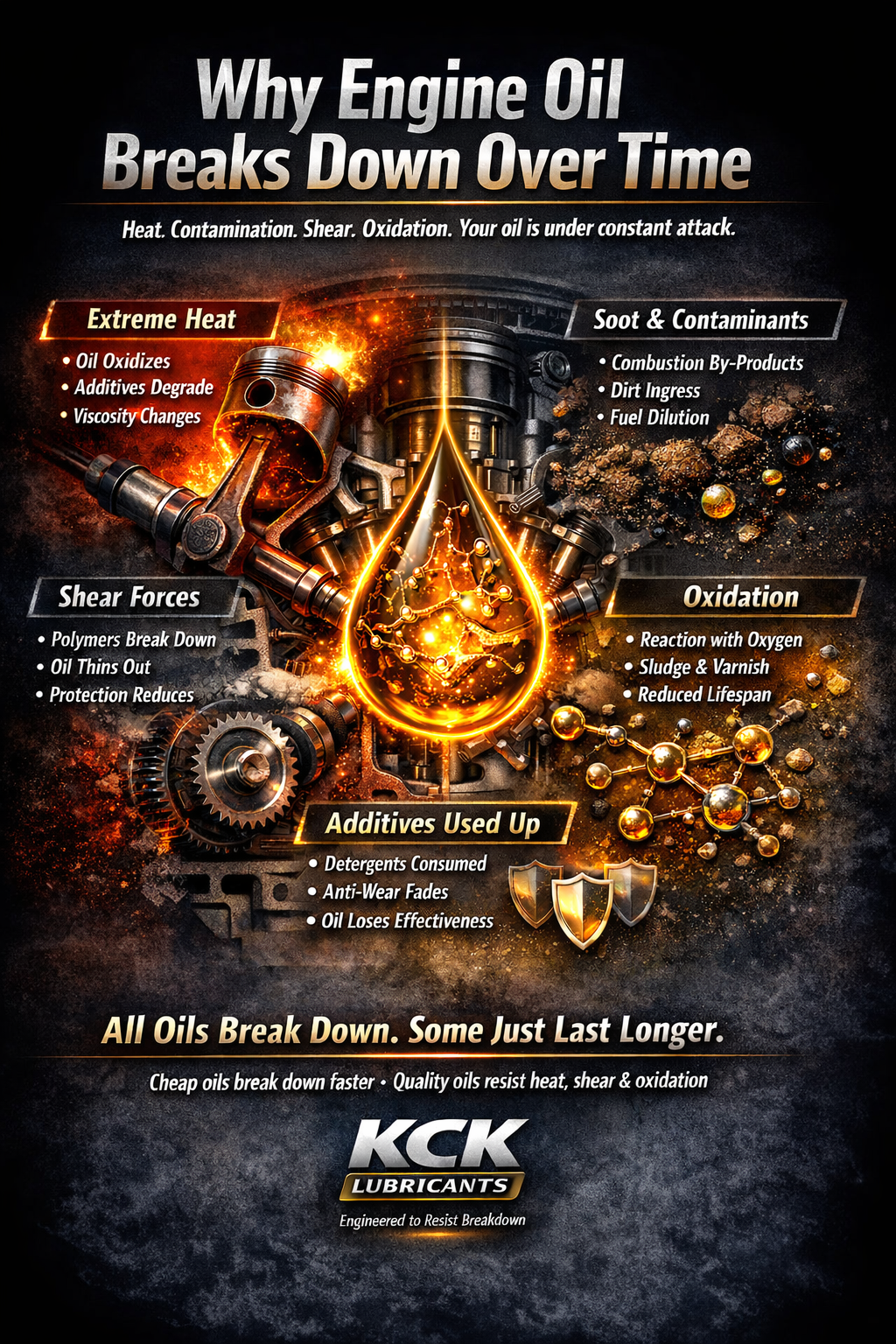
Over time, heat, oxidation, and contamination gradually reduce the oil’s effectiveness. As discussed in our article on why engine oil breaks down over time, several processes contribute to this degradation, including Oxidation, Thermal Degradation, and mechanical stress on the oil molecules.
Eventually, the oil reaches a point where it can no longer provide optimal protection for the engine.
The Origin of the 3,000 Mile Oil Change Rule
For many years, the commonly recommended oil change interval was every 3,000 miles (or about 5,000 kilometres).
This recommendation dates back to a time when engines were less efficient, oils were less advanced, and fuel systems produced higher levels of contamination.
Modern engines and lubricants have improved dramatically since then. Advances in base oil technology, additive chemistry, and engine design have allowed many vehicles to safely operate for much longer intervals between oil changes.
Manufacturer Recommendations Matter
Today, the most reliable oil change guidance comes from the vehicle manufacturer.
Many modern vehicles now recommend oil change intervals between:
-
8,000 and 15,000 kilometres
-
5,000 and 10,000 miles
Some vehicles also use electronic oil life monitoring systems that calculate oil change intervals based on driving conditions, engine load, and operating temperature.
These systems provide a more accurate estimate of oil condition than fixed mileage intervals.
Driving Conditions Can Change the Interval
Not all driving conditions place the same demands on engine oil.
Certain environments can accelerate oil degradation and may require more frequent oil changes.
These include:
-
Frequent short trips where the engine does not fully warm up
-
Heavy towing or hauling loads
-
Extreme heat or cold climates
-
Stop-start urban driving
-
Dusty or off-road environments
In these conditions, engine oil can degrade more quickly due to increased contamination and thermal stress.
Conventional vs Synthetic Oil
The type of oil used also influences oil change intervals.
Conventional mineral oils typically require more frequent replacement because they are more susceptible to heat and oxidation.
Synthetic oils are engineered for greater thermal stability, improved resistance to Oxidation, and longer service life.
Because of these properties, high-quality synthetic lubricants can often maintain protection over extended intervals compared with conventional oils.
The Role of Additives
Modern engine oils rely on complex additive systems to enhance performance and durability.
These additives include detergents, dispersants, anti-wear agents, and antioxidants that protect the engine and maintain oil stability.
However, these additives are gradually consumed as they perform their functions.
Industry standards set by organizations such as the American Petroleum Institute and the Society of Automotive Engineers help ensure that engine oils meet strict durability and performance requirements.
Even so, once the additive package becomes depleted, the oil must be replaced to maintain proper engine protection.
What Happens If Oil Changes Are Ignored?
Operating an engine with degraded oil can lead to several problems, including:
-
Increased engine wear
-
Sludge and deposit formation
-
Reduced fuel efficiency
-
Poor engine performance
-
Potential long-term engine damage
In severe cases, neglected oil changes can result in significant internal engine damage that may require expensive repairs.
Regular oil changes remain one of the simplest and most effective maintenance steps for extending engine life.
Real-World Example
Vehicles operating under high-performance or heavy-duty conditions often require particularly robust lubrication.
Motorsport engines, commercial vehicles, and high-load diesel engines can expose lubricants to sustained high temperatures and mechanical stress.
In these environments, high-performance lubricants are engineered to maintain viscosity stability and protect engine components even under demanding operating conditions.
Technical Summary
Key factors affecting oil change intervals include:
-
Oil degradation through oxidation and thermal stress
-
Contamination from combustion by-products
-
Depletion of additive packages
-
Driving conditions and engine load
-
Type and quality of engine oil used
Regular oil changes help maintain lubrication performance and prevent long-term engine damage.
Myth vs Fact
Myth:
All vehicles should have their oil changed every 3,000 miles.
Fact:
Many modern vehicles can safely operate for significantly longer intervals when using high-quality oils and following manufacturer recommendations.
About the Author
Matt is part of the team behind KCK Lubricants, an Australian manufacturer specializing in high-performance engine oils for motorsport, heavy-duty diesel, and demanding mechanical applications.
With more than 25 years of formulation experience and real-world testing in extreme environments, KCK oils are engineered to perform where reliability matters most.
Internal Linking
Previous articles:
Week 1
Ultimate Guide to Engine Oil
Week 2
What Does Oil Viscosity Mean
Week 3
Synthetic vs Mineral Oil
Week 4
Why Engine Oil Turns Black
Week 5
Why Cheap Oil Costs More
Week 6
Diesel Engine Oil Specifications
Week 8
Why Engine Oil Breaks Down Over Time
Week 9
How Often Should You Change Your Engine Oil?
Week 10