
Why Cheap Engine Oil Costs More in the Long Run
Introduction
At first glance, engine oil can seem like a commodity. A bottle is a bottle, right?
Not quite.
Two oils might share the same viscosity rating, yet perform very differently under heat, pressure, and contamination.
Pro Tip: The cheapest oil on the shelf often becomes the most expensive oil in your engine.
Oil quality directly affects engine wear, efficiency, reliability, and long-term maintenance costs.
The Hidden Cost of Cheap Oil
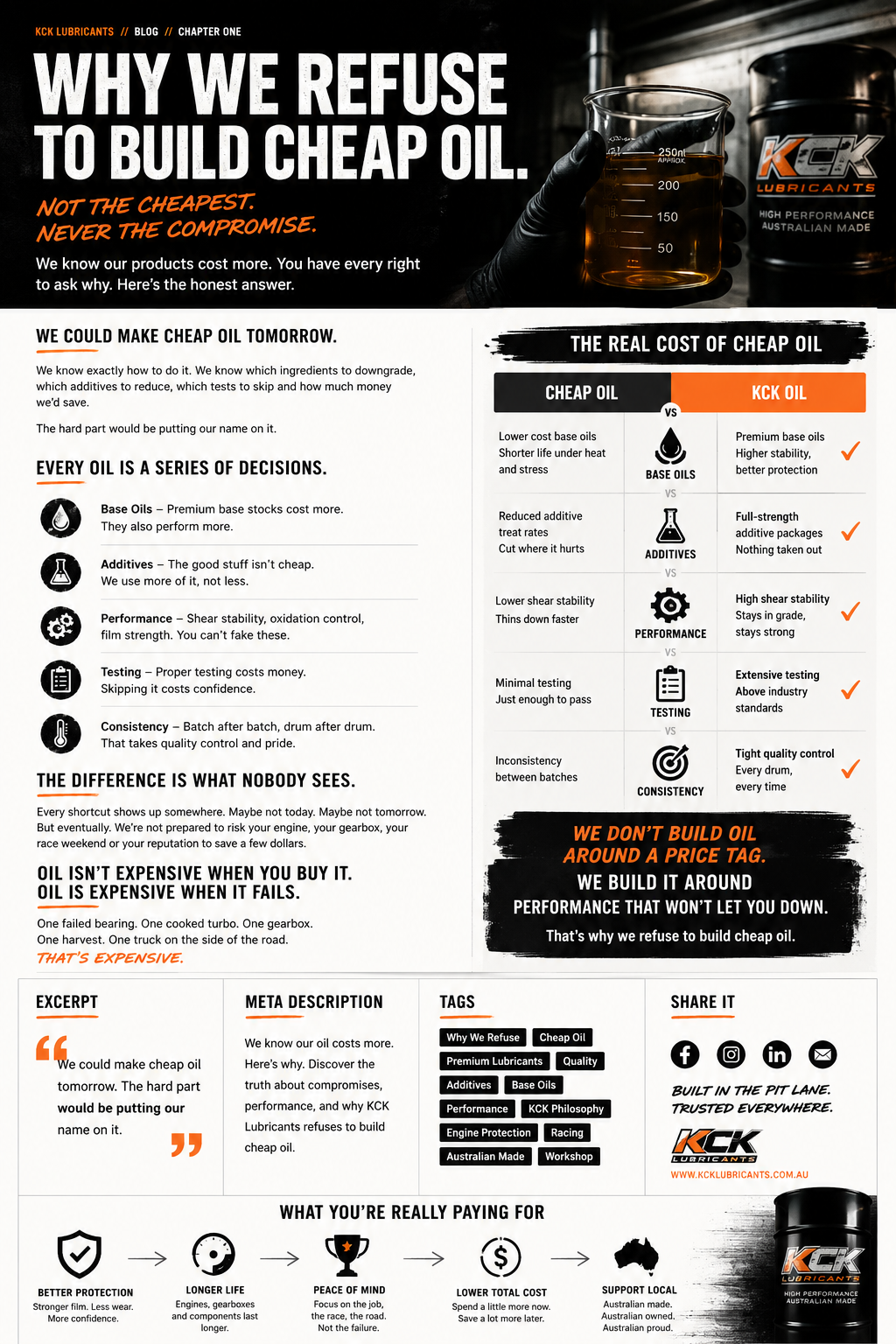
Low-cost oils often cut corners in areas that are not immediately visible to consumers.
These may include:
-
Lower quality base oils
-
Reduced additive packages
-
Poor oxidation resistance
-
Lower thermal stability
Over time this can result in:
-
Increased engine wear
-
Sludge buildup
-
Reduced fuel efficiency
-
Shorter oil life
-
Expensive engine repairs
The savings at the checkout counter can quickly disappear when the engine begins to suffer.
Base Oil Quality Matters
The foundation of every engine oil is its base oil.
Higher-quality base oils provide:
-
Better thermal stability
-
Lower volatility
-
Improved resistance to oxidation
-
Greater viscosity stability
Lower-quality oils may thin out or degrade faster when exposed to high temperatures or heavy loads.
Did you know? Two oils with the same viscosity grade can behave completely differently depending on the quality of their base oils.
This is where premium formulations make a major difference.
The Importance of Additive Packages
Modern engine oils rely on sophisticated additive chemistry.
Additives perform critical functions such as:
-
Preventing wear
-
Neutralising acids
-
Suspending contaminants
-
Reducing friction
-
Controlling oxidation
Cheap oils often contain minimal additive packages, which means the oil loses its protective properties much sooner.
Premium oils use carefully balanced additive systems designed to protect engines even under extreme conditions.
Cheap Oil Breaks Down Faster
Heat, pressure, and contamination constantly attack engine oil.
Low-quality oils are more vulnerable to:
-
Oxidation
-
Thermal breakdown
-
Viscosity loss
-
Deposit formation
As oil degrades, it loses its ability to lubricate and protect engine components effectively.
This leads to:
-
Increased friction
-
Accelerated wear
-
Reduced engine efficiency
Sludge and Deposit Formation
One of the biggest dangers of low-quality oil is engine sludge.
Sludge forms when oil oxidises and contaminants accumulate faster than the additive package can control them.
Sludge can:
-
Block oil passages
-
Restrict lubrication
-
Cause overheating
-
Reduce engine life
High-quality oils contain detergents and dispersants that keep engines clean and contaminants suspended until they are removed during oil changes.
Cheap Oil Can Reduce Fuel Efficiency
Engine oil plays a major role in internal friction.
If oil breaks down or loses viscosity stability, friction inside the engine increases.
More friction means:
-
Higher fuel consumption
-
Reduced engine performance
-
Increased heat
Premium oils maintain consistent viscosity and lubrication, helping engines operate more efficiently.
Why Premium Oil Saves Money
Quality oil protects engines better and lasts longer.
Benefits include:
-
Reduced engine wear
-
Cleaner engines
-
Improved fuel efficiency
-
Longer oil life
-
Lower maintenance costs
Pro Tip: Investing in high-quality engine oil is one of the simplest ways to extend engine life and reduce long-term operating costs.
5 Warning Signs of Low-Quality Oil
-
Oil becomes excessively thick or sludgy
-
Increased engine noise or roughness
-
Reduced fuel efficiency
-
Heavy deposits under the oil cap
-
Oil degrades quickly between service intervals
If these signs appear regularly, the oil quality may be insufficient for the engine's demands.
FAQ
Is cheap engine oil bad for engines?
Not always immediately, but lower-quality oils often degrade faster and provide less protection under stress.
Why do premium engine oils cost more?
Higher-quality base oils and advanced additive packages increase manufacturing cost but dramatically improve engine protection and longevity.
Can cheap oil damage my engine?
Over time, poor lubrication, sludge buildup, and increased wear can shorten engine life.
Do premium oils really make a difference?
Yes. Higher-quality oils maintain viscosity stability, resist oxidation, and protect engine components more effectively.
Internal Linking
Previous articles:
Week 1
Ultimate Guide to Engine Oil
Week 2
What Does Oil Viscosity Mean
Week 3
Synthetic vs Mineral Oil
Week 4
Why Engine Oil Turns Black
Week 5
Why Cheap Oil Costs More
Week 6
Diesel Engine Oil Specifications
Week 8
Why Engine Oil Breaks Down Over Time
Week 9
How Often Should You Change Your Engine Oil?
Week 10