
Diesel Engine Oil Specifications Explained
What Do API Ratings Like CK-4 and CJ-4 Really Mean?
Introduction
Diesel engines operate under some of the harshest conditions found in internal combustion engines.
Compared to petrol engines, diesel engines generate:
-
Higher combustion pressures
-
More soot contamination
-
Greater thermal stress
-
Heavier loads over longer periods
Because of this, diesel oils must meet strict performance standards set by industry organisations.
Pro Tip: Choosing the correct diesel oil specification is just as important as selecting the correct viscosity.
These specifications ensure oils can handle the demands of modern diesel engines while protecting critical components.
What Are Diesel Oil Specifications?
Diesel oil specifications are performance standards that define how well an oil protects an engine.
They are developed by organisations such as:
-
American Petroleum Institute (API)
-
Association des Constructeurs Européens d'Automobiles (ACEA)
These organisations establish testing procedures that evaluate an oil’s ability to:
-
Control soot and deposits
-
Prevent engine wear
-
Resist oxidation
-
Maintain viscosity under stress
-
Protect emissions systems
When an oil meets a specification, it means it has passed rigorous laboratory and engine tests.
Understanding API Diesel Oil Ratings
The most common diesel oil specifications come from the API service categories.
These categories evolve as engine technology improves.
Examples include:
| API Rating | Typical Application |
|---|---|
| CJ-4 | Older diesel engines with emissions systems |
| CK-4 | Modern high-performance diesel engines |
| FA-4 | Fuel-efficient modern engines requiring low viscosity oils |
Each new category improves performance requirements in areas such as:
-
Wear protection
-
Oxidation resistance
-
Shear stability
-
Soot control
What Is API CK-4?
API CK-4 is the current standard for most modern heavy-duty diesel engines.
Introduced in 2016, CK-4 oils provide significant improvements over previous specifications.
Key benefits include:
-
Better oxidation resistance at high temperatures
-
Improved shear stability
-
Stronger wear protection
-
Enhanced aeration control
CK-4 oils are designed to handle modern diesel engines that run hotter and cleaner due to emissions regulations.
What Is API CJ-4?
API CJ-4 was introduced in 2006 to support diesel engines equipped with emissions systems such as diesel particulate filters (DPF).
CJ-4 oils focus heavily on:
-
Controlling soot contamination
-
Reducing harmful deposits
-
Protecting emissions equipment
While still used in many engines today, CK-4 oils provide improved performance for newer diesel platforms.
Why Diesel Engines Produce More Soot
Diesel combustion naturally produces more soot particles than petrol engines.
These microscopic carbon particles enter the crankcase and contaminate the oil.
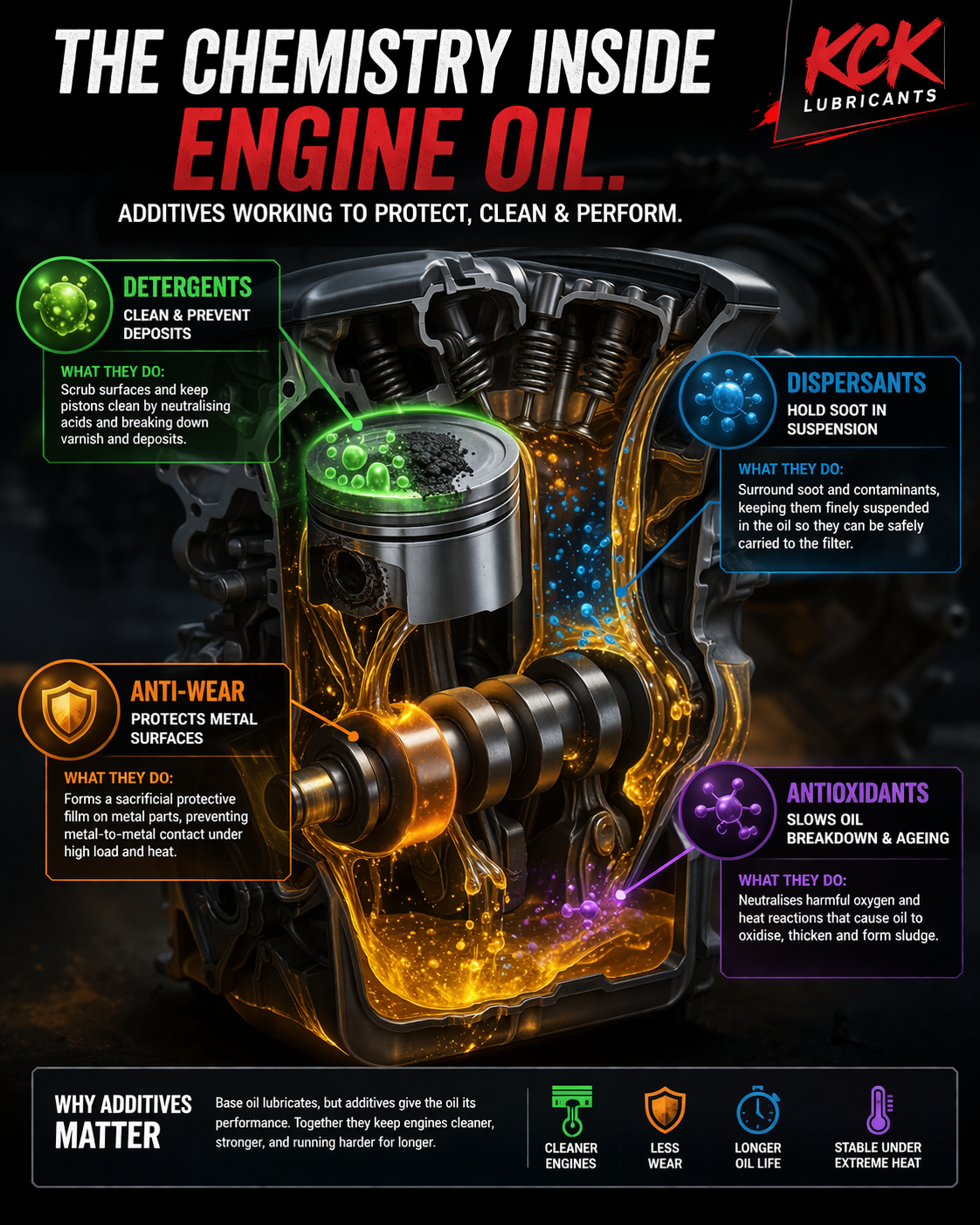
High-quality diesel oils contain strong dispersant additives that:
-
Keep soot suspended
-
Prevent sludge formation
-
Protect engine components
Did you know? A diesel engine oil may hold several percent soot by weight while still protecting the engine effectively.
Managing soot is one of the biggest challenges in diesel lubrication.
Protecting Modern Diesel Emissions Systems
Modern diesel vehicles use advanced emissions technology such as:
-
Diesel particulate filters (DPF)
-
Exhaust gas recirculation (EGR)
-
Selective catalytic reduction (SCR)
These systems require oils with controlled levels of:
-
Sulphated ash
-
Phosphorus
-
Sulphur
Using the wrong oil can damage emissions components and reduce system efficiency.
How to Choose the Right Diesel Oil
When selecting diesel engine oil, consider these key factors:
Manufacturer Specifications
Always follow the oil specification recommended by the engine manufacturer.
Engine Age
Older engines may specify CJ-4 oils, while newer engines often require CK-4.
Operating Conditions
Heavy towing, high loads, and extreme temperatures require oils with excellent thermal stability.
Oil Quality
Premium oils with advanced base stocks and additive packages provide better protection and longer service life.
Pro Tip: High-quality diesel oils help maintain engine cleanliness and protect turbochargers, which are particularly sensitive to oil quality.
5 Common Diesel Oil Mistakes
-
Using oil that does not meet the required specification
-
Ignoring soot contamination in high-load engines
-
Mixing incompatible oil types
-
Extending oil changes beyond recommended intervals
-
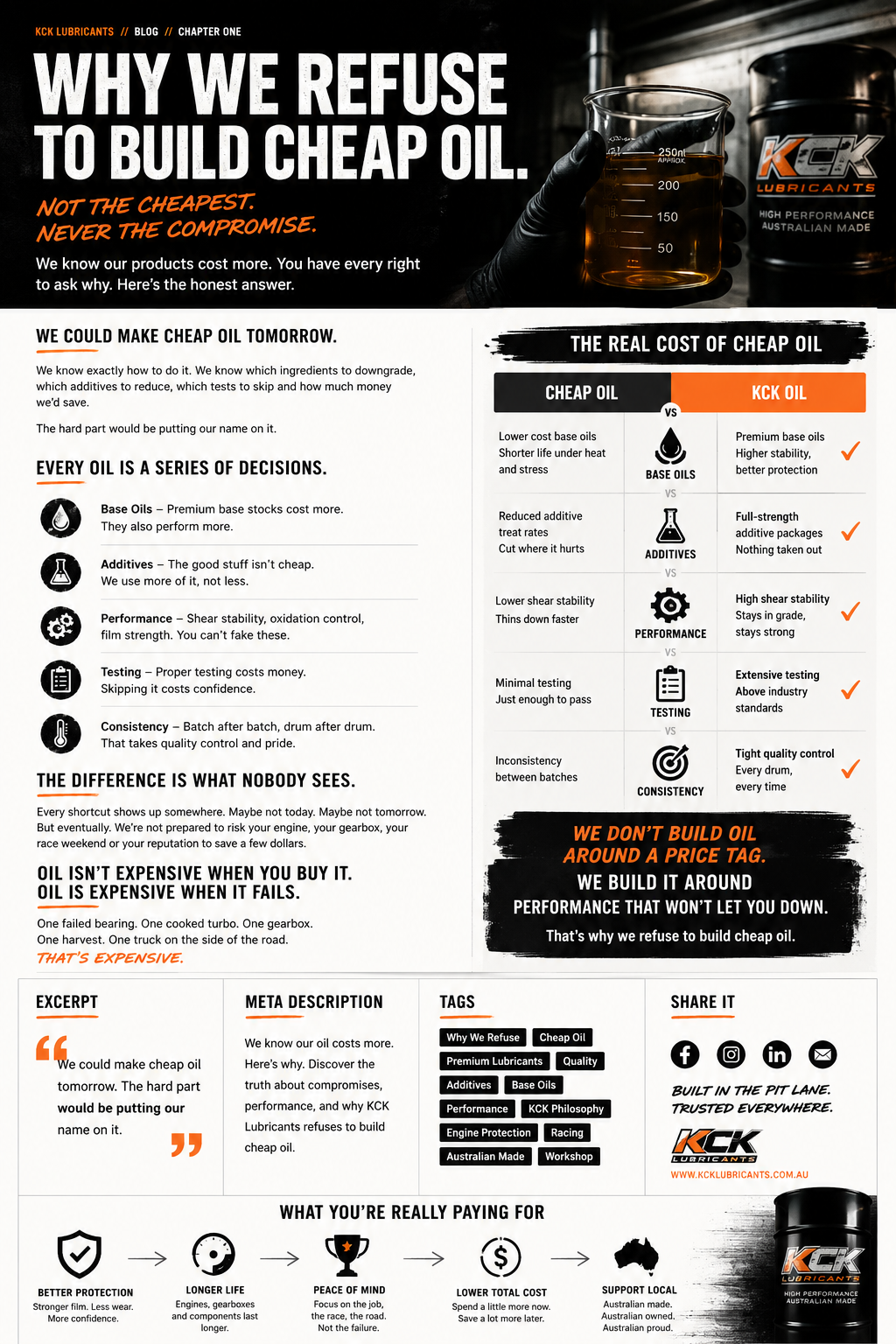
Choosing oil based on price rather than performance
Diesel engines are expensive machines — proper lubrication is critical to protecting that investment.
FAQ
What does CK-4 mean in diesel oil?
CK-4 is a modern diesel engine oil specification developed by the American Petroleum Institute that provides improved oxidation resistance, wear protection, and shear stability.
Can CK-4 replace CJ-4 oil?
In most cases, yes. CK-4 oils are generally backward compatible and provide improved protection.
Why do diesel engines need special oil?
Diesel engines produce more soot and operate under higher pressure, requiring oils designed to manage contamination and maintain protection.
Does diesel oil work in petrol engines?
Some diesel oils can be used in petrol engines if they meet the required specifications, but they are typically formulated specifically for diesel applications.
Internal Linking
Previous articles:
Week 1
Ultimate Guide to Engine Oil
Week 2
What Does Oil Viscosity Mean
Week 3
Synthetic vs Mineral Oil
Week 4
Why Engine Oil Turns Black
Week 5
Why Cheap Oil Costs More
Week 6
Diesel Engine Oil Specifications
Week 8
Why Engine Oil Breaks Down Over Time
Week 9
How Often Should You Change Your Engine Oil?
Week 10