
Oil Additives Explained
The Chemistry That Protects Your Engine
Introduction
Most people think engine oil is just oil.
In reality, modern engine lubricants are complex chemical systems.
Up to 25% of a finished engine oil can be additives, carefully blended to perform specific functions inside the engine.
These additives allow oil to:
-
Prevent wear
-
Keep engines clean
-
Control oxidation
-
Neutralise acids
-
Suspend contaminants
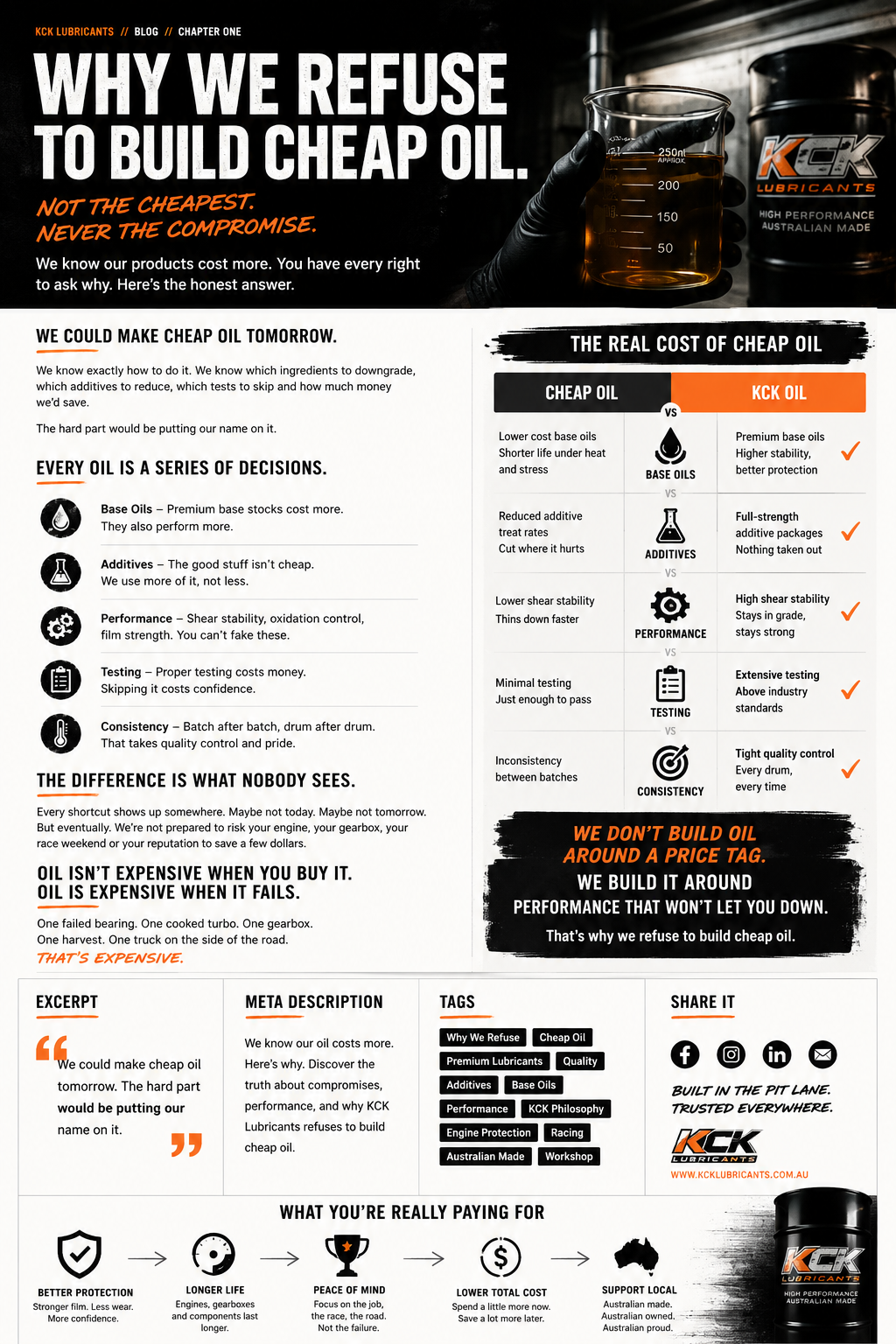
Pro Tip: The difference between cheap oil and premium oil is often the quality and balance of the additive package.
Why Oil Additives Are Necessary
Base oil alone cannot handle the harsh environment inside an engine.
Modern engines expose oil to:
-
High temperatures
-
Combustion by-products
-
Moisture
-
Soot contamination
-
Mechanical shear forces
Additives enhance base oil performance and allow lubricants to maintain protection under these extreme conditions.
The Most Important Engine Oil Additives
Detergents
Detergents help keep engine components clean.
They prevent the formation of deposits on:
-
Pistons
-
Valves
-
Cylinder walls
They also neutralise acidic combustion byproducts that can cause corrosion.
Dispersants
Dispersants keep contaminants suspended in the oil so they can be removed during an oil change.
They are particularly important in diesel engines, where soot contamination is common.
Without dispersants, soot would form sludge and block oil passages.
Anti-Wear Additives
Anti-wear additives form a protective chemical layer on metal surfaces.
This layer helps protect critical engine components such as:
-
Camshafts
-
Lifters
-
Bearings
One of the most widely used anti-wear compounds is
Zinc dialkyldithiophosphate, commonly known as ZDDP.
Antioxidants
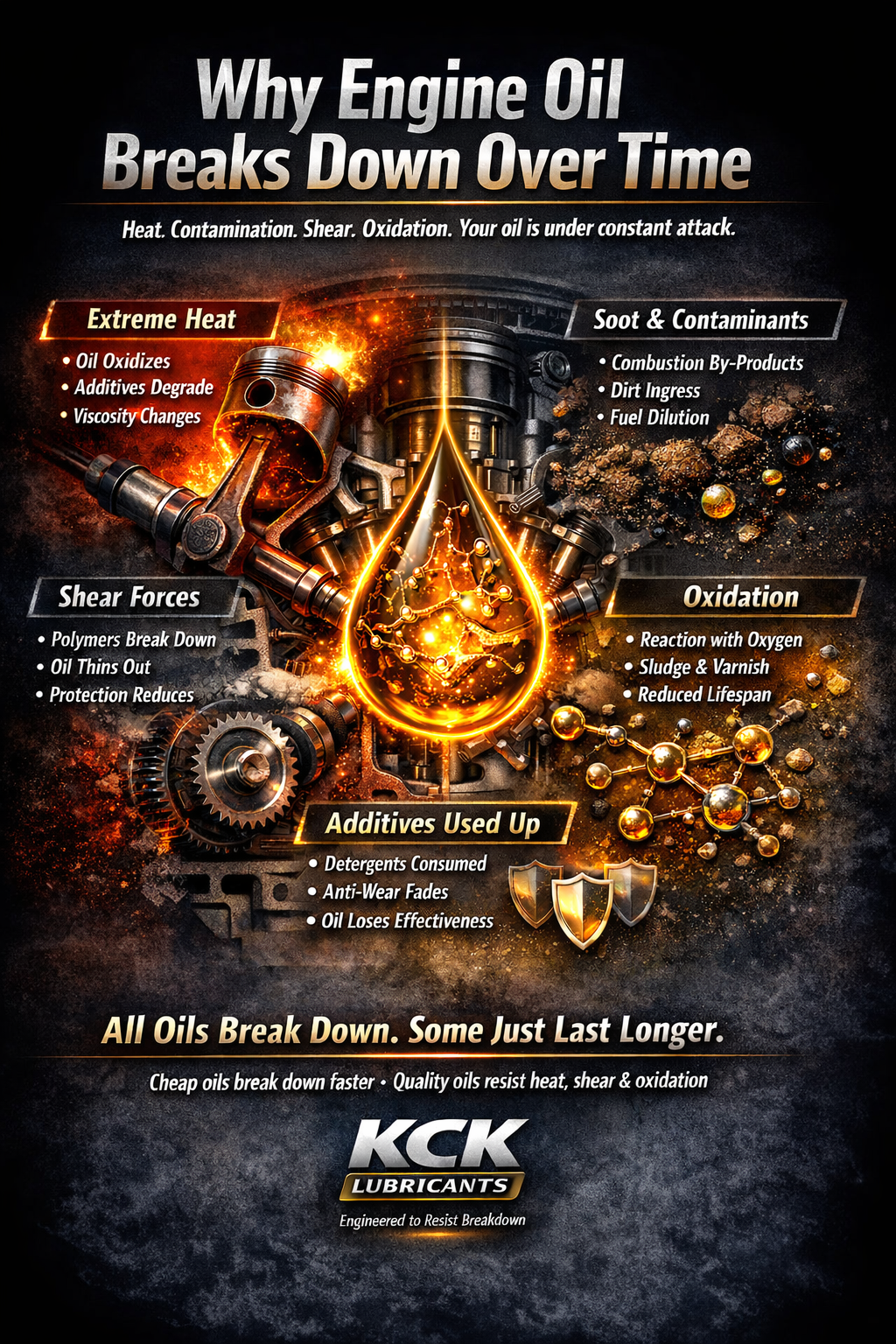
Engine oil is constantly exposed to oxygen and heat, which causes oxidation.
Oxidation leads to:
-
Oil thickening
-
Sludge formation
-
Reduced lubrication performance
Antioxidant additives slow this process and extend oil life.
Friction Modifiers
Friction modifiers reduce internal engine friction.
Benefits include:
-
Improved fuel efficiency
-
Reduced wear
-
Smoother engine operation
Anti-Foam Agents
Engine oil can become aerated when churned by moving components.
Anti-foam additives prevent air bubbles from forming in the oil, ensuring consistent lubrication.
Why Additive Balance Matters
The effectiveness of engine oil doesn’t depend on one additive, but on the balance between them.
Modern oil formulations are carefully engineered so that additives work together without interfering with one another.
Did you know? Adding aftermarket oil additives can actually disrupt this balance and reduce the effectiveness of the oil.
This is one reason why high-quality oils are carefully formulated by experienced lubrication engineers.
Real-World Application
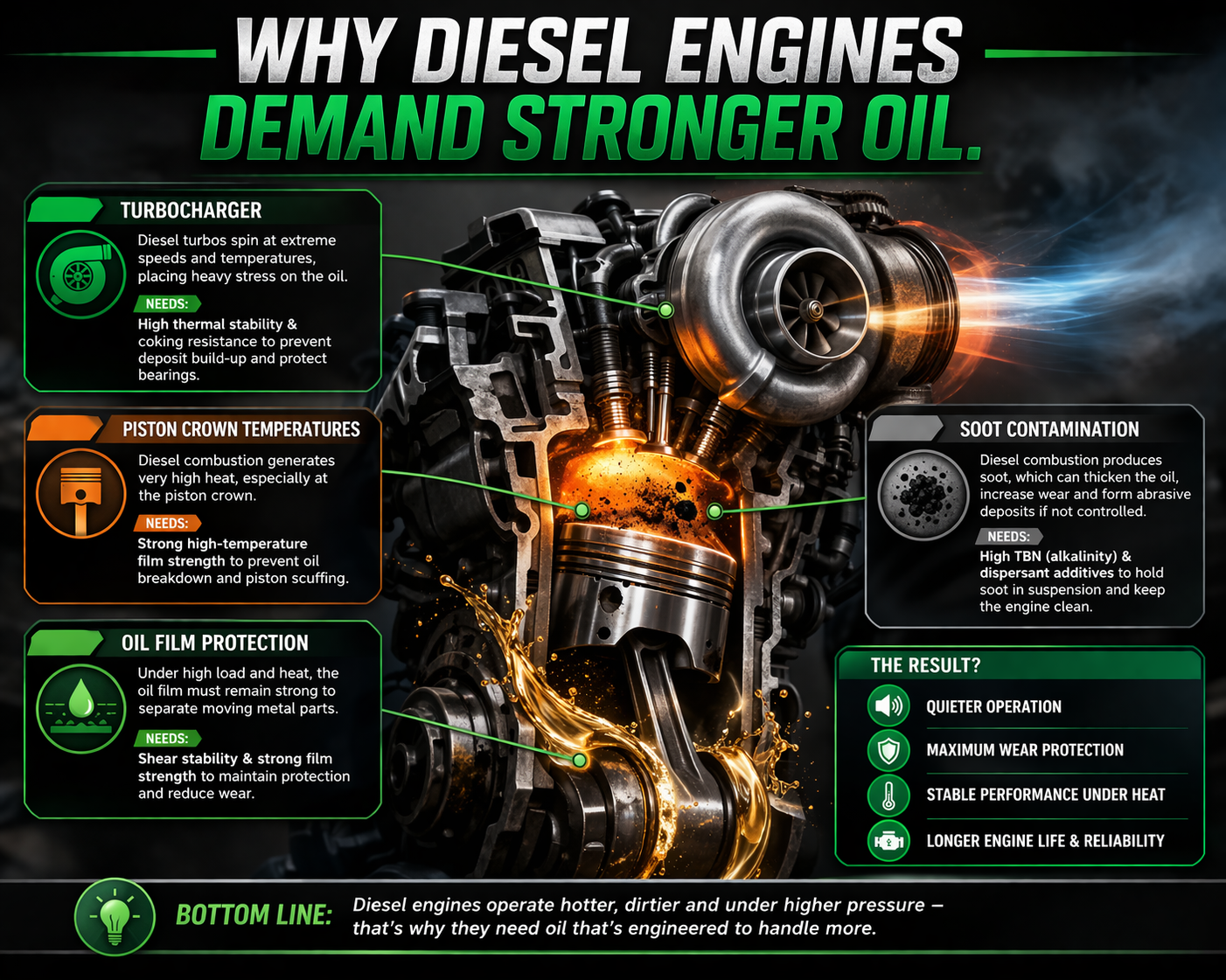
High-performance engines and heavy-duty diesel engines place enormous stress on oil additives.
Under extreme conditions, additives must:
-
Control soot contamination
-
Maintain viscosity stability
-
Protect turbocharger bearings
-
Prevent piston deposits
Motorsport environments push these systems even further, where additive stability can mean the difference between finishing the race or destroying an engine.
Oil Additive Myths
Myth: Adding aftermarket oil additives improves engine protection.
Fact: Modern engine oils already contain balanced additive packages designed by lubrication chemists.
Adding extra additives can upset this balance and reduce performance.
Myth: All engine oils contain the same additives.
Fact: Additive quality and concentration vary significantly between oils, which is why performance differences exist.
5 Signs an Oil’s Additive Package Is Failing
-
Rapid oil thickening
-
Sludge buildup inside the engine
-
Increased engine wear
-
Heavy deposits on pistons or valves
-
Reduced oil life
These signs often indicate that the oil’s additive system is no longer able to manage contamination and oxidation effectively.
FAQ
What percentage of engine oil is additives?
Typically between 10% and 25%, depending on the formulation and intended application.
What is ZDDP in engine oil?
Zinc dialkyldithiophosphate is a common anti-wear additive that forms a protective film on metal surfaces.
Are oil additives necessary?
Yes. Without additives, base oil alone would not provide adequate protection against wear, deposits, oxidation, and corrosion.
Should I add aftermarket oil additives?
In most cases, no. Modern engine oils already contain carefully balanced additive systems.
Technical Summary
Key Concepts Covered
-
Oil additive chemistry
-
Detergent and dispersant functions
-
Anti-wear protection
-
Oxidation control
Relevant Standards
-
American Petroleum Institute engine oil performance standards
-
Society of Automotive Engineers lubrication classifications
Internal Linking
Previous articles:
Week 1
Ultimate Guide to Engine Oil
Week 2
What Does Oil Viscosity Mean
Week 3
Synthetic vs Mineral Oil
Week 4
Why Engine Oil Turns Black
Week 5
Why Cheap Oil Costs More
Week 6
Diesel Engine Oil Specifications
Week 8
Why Engine Oil Breaks Down Over Time
Week 9
How Often Should You Change Your Engine Oil?
Week 10