
Why Engine Oil Breaks Down Over Time
Engine oil works in one of the harshest environments in modern machinery. Inside a running engine it must cope with intense heat, high pressure, combustion contaminants, and constant mechanical stress.
Over time, these conditions gradually degrade the oil. Even the highest quality lubricant will eventually lose its ability to protect the engine effectively.
Understanding how engine oil breaks down helps explain why regular oil changes are critical for long-term engine health.
The Harsh Environment Inside an Engine
When an engine is running, the oil is constantly circulating through areas exposed to extreme conditions.
Temperatures in critical engine components can exceed 150°C, while combustion by-products and microscopic metal particles contaminate the oil as it performs its job.
At the same time, the oil is being forced through tight clearances, bearings, and high-speed moving parts thousands of times per minute.
This environment creates several mechanisms that gradually degrade engine oil.
Oxidation: When Oil Reacts With Oxygen
One of the primary causes of oil degradation is Oxidation.
Oxidation occurs when the oil reacts with oxygen at high temperatures. This chemical reaction causes the oil molecules to break down and form new compounds that are less stable and less effective as lubricants.
As oxidation progresses, the oil can begin to:
-
Thicken
-
Form sludge or varnish deposits
-
Lose its ability to flow properly
High-quality oils contain antioxidant additives designed to slow this process, but over time even these protective additives are consumed.
Thermal Breakdown
Engines generate enormous amounts of heat, especially under heavy load or high-performance conditions.
This heat can cause Thermal Degradation, where the molecular structure of the oil begins to break apart.
When this happens, the oil can lose its viscosity stability and protective film strength.
Lower quality oils often break down more quickly under heat, which is why premium lubricants are engineered to maintain stability at elevated temperatures.
Mechanical Shear
Modern multi-grade oils rely on carefully engineered molecules to maintain their viscosity across a wide temperature range.
Inside the engine, however, these molecules are subjected to extreme mechanical stress. High-speed moving parts can physically break apart viscosity modifiers in a process known as Viscosity Shear.
When this happens, the oil may gradually become thinner than intended, reducing its ability to maintain a protective film between engine components.
Contamination From Combustion
Every time fuel burns inside an engine, it produces microscopic particles and gases that eventually find their way into the oil.
These contaminants can include:
-
Soot
-
Fuel dilution
-
Water condensation
-
Metal particles from normal engine wear
Engine oil is formulated with additives that help suspend and neutralize many of these contaminants, but as contamination levels increase, the oil becomes less effective at protecting the engine.
Additives Get Used Up
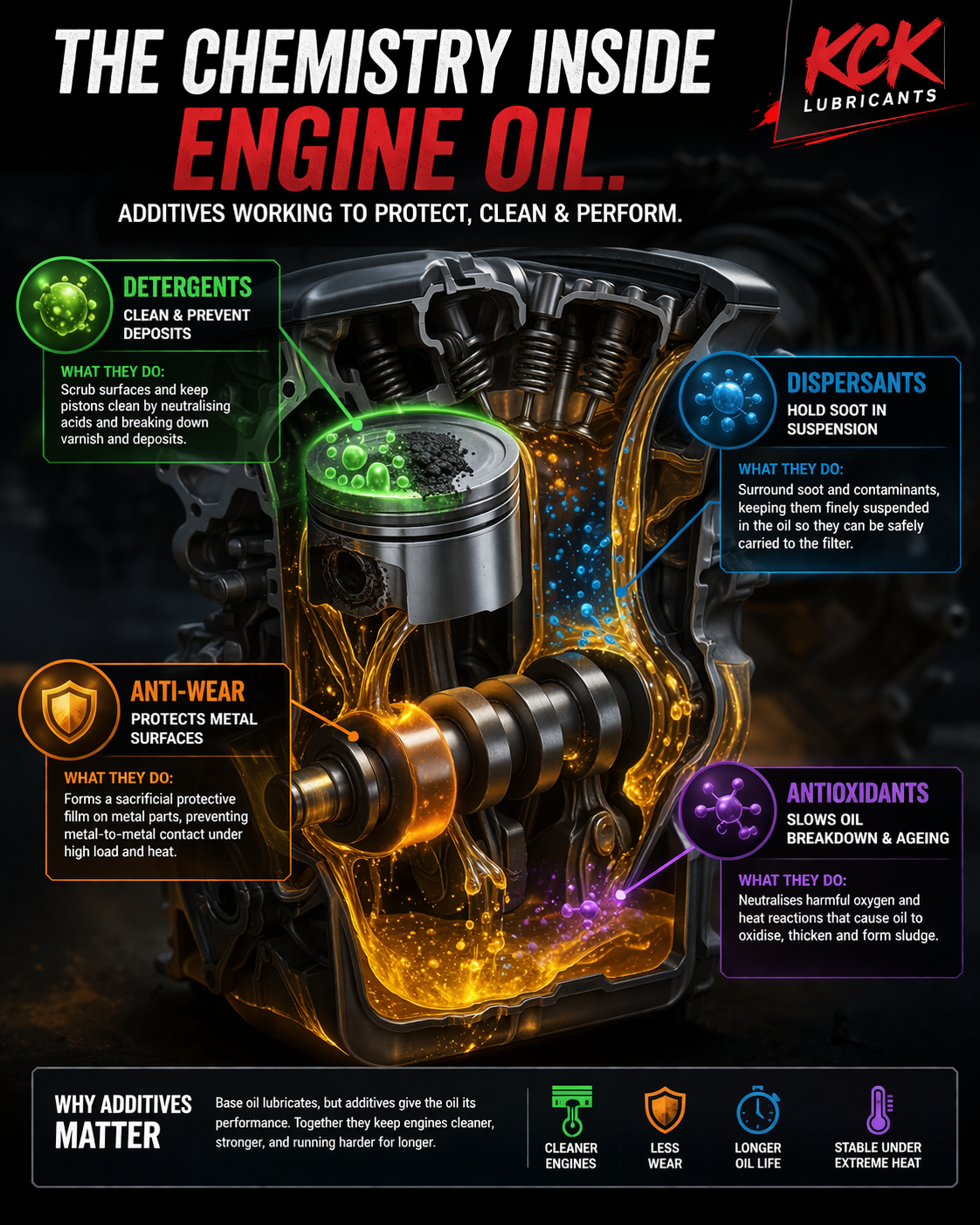
Modern engine oils contain sophisticated additive packages designed to improve performance and protection.
These additives may include detergents, dispersants, anti-wear compounds, and corrosion inhibitors.
Over time, these additives are gradually consumed as they perform their intended function.
Once the additive package is depleted, the oil can no longer provide the same level of protection it once did.
Industry standards such as those defined by the American Petroleum Institute and the Society of Automotive Engineers help ensure that modern oils meet strict performance requirements, but even the best formulations eventually reach the end of their service life.
Why Oil Change Intervals Matter
Because oil degrades gradually, the loss of protection may not be immediately noticeable.
Engines can continue to run normally even as oil performance declines. However, operating an engine with degraded oil can accelerate wear, increase deposit formation, and reduce overall engine efficiency.
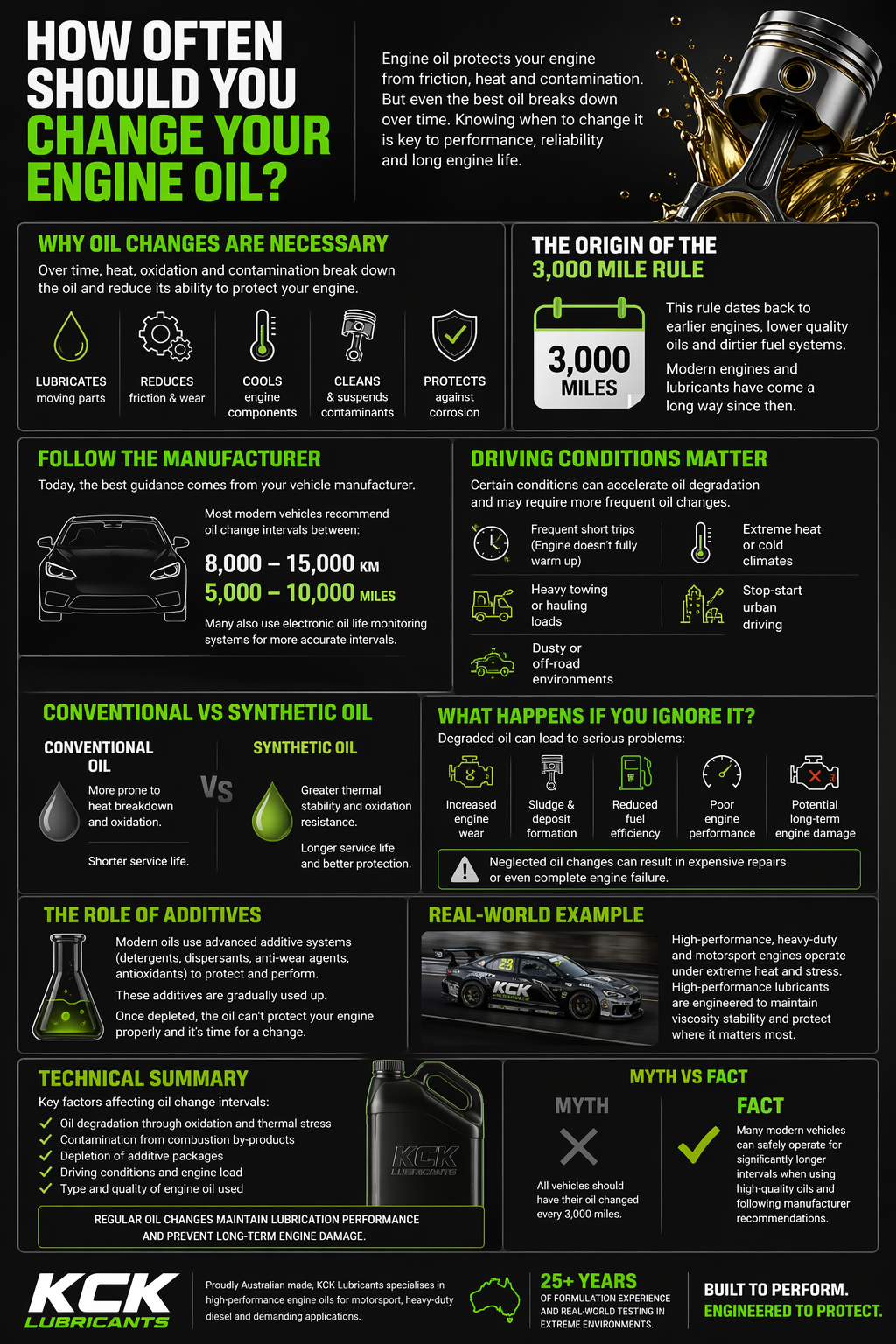
Regular oil changes remove degraded oil and contaminants while replenishing the engine with fresh lubricants and a full additive package.
This simple maintenance step is one of the most effective ways to extend engine life.
Real World Example
High-performance and heavy-duty engines place even greater demands on engine oil.
Motorsport engines, heavy towing applications, and commercial diesel vehicles often operate under sustained high temperatures and loads.
In these environments, oil degradation can occur more rapidly, which is why high-performance lubricants are engineered with advanced base oils and robust additive systems designed to resist heat, oxidation, and mechanical stress.
Technical Summary
Key degradation mechanisms covered in this article:
-
Oxidation
-
Thermal degradation
-
Mechanical viscosity shear
-
Contamination from combustion by-products
-
Additive depletion
These processes occur gradually during normal engine operation and ultimately determine the effective service life of the oil.
Myth vs Fact
Myth:
Engine oil only needs to be changed when it turns black.
Fact:
Oil colour alone is not a reliable indicator of oil condition. Many oils darken quickly as detergents suspend contaminants, while chemical degradation may occur long before visible changes appear.
About the Author
Matt is part of the team behind KCK Lubricants, an Australian manufacturer specializing in high-performance engine oils for motorsport, heavy-duty diesel, and demanding mechanical applications.
With more than 25 years of formulation and real-world testing experience, KCK oils are engineered to perform in environments where reliability is critical and failure is not an option.
Internal Linking
Previous articles:
Week 1
Ultimate Guide to Engine Oil
Week 2
What Does Oil Viscosity Mean
Week 3
Synthetic vs Mineral Oil
Week 4
Why Engine Oil Turns Black
Week 5
Why Cheap Oil Costs More
Week 6
Diesel Engine Oil Specifications
Week 8
Why Engine Oil Breaks Down Over Time
Week 9
How Often Should You Change Your Engine Oil?
Week 10