
Why Engine Oil Turns Black: The Truth Behind Dark Oil
Introduction
Many drivers panic when they see dark oil on the dipstick. The reality: black oil is often a sign that it’s doing its job.
Pro Tip: Oil color alone isn’t an indicator of wear — its ability to protect, clean, and lubricate matters far more.
Modern engines produce more soot and combustion byproducts than ever, especially in diesel and turbocharged engines. Understanding why oil turns black helps you maintain your engine correctly and avoid unnecessary oil changes.
What Causes Engine Oil to Turn Black?
-
Soot and Combustion Byproducts – Diesel engines, high-performance gasoline engines, and turbocharged vehicles generate soot. Oil traps these tiny particles to keep the engine clean.
-
Additive Interaction – Detergents and dispersants in modern oils suspend contaminants and prevent deposits. This naturally darkens the oil.
-
Oxidation – Over time, heat and oxygen can slightly darken oil without affecting performance.
-
Microscopic Wear Particles – Tiny metal or carbon particles from normal engine operation are held in suspension.
Did you know? The dark color in modern high-performance oils indicates they are actively cleaning your engine, not harming it.
Signs Black Oil Is Normal vs Problematic
Normal Black Oil:
-
Dark but smooth in texture
-
No sludge or thick deposits
-
Smells like fresh engine oil (slightly burnt is normal in diesel)
Problematic Oil:
-
Thick, sticky sludge
-
Burnt smell or acrid odor
-
Presence of water, coolant, or foam
Pro Tip: Always check oil level, texture, and smell — color alone is not a reliable indicator.
How Additives Keep Oil Clean
Modern engine oils contain additive packages that prevent harmful buildup:
-
Detergents – Neutralize acids and prevent deposits
-
Dispersants – Keep soot and contaminants suspended
-
Anti-wear agents – Protect pistons, rings, and bearings
Using high-quality oils like KCK Lubricants ensures your engine stays clean, even under high load, heavy towing, or motorsport conditions.
Common Myths About Black Oil
-
Myth: Black oil is bad for the engine.
Fact: It’s often a sign of proper detergent action. -
Myth: You must change oil as soon as it darkens.
Fact: Proper high-quality oils can safely maintain performance even when dark. -
Myth: Diesel oil always needs changing sooner.
Fact: Soot-heavy diesel oils are designed to suspend contaminants and maintain protection longer.
How to Maintain Engine Oil Health
-
Check oil level and texture regularly.
-
Follow manufacturer-recommended viscosity and grade.
-
Use high-quality, stable oils with strong detergent packages.
-
Avoid aftermarket additives unless recommended by your engine manufacturer.
-
Monitor oil life with modern sensors or mileage-based schedules.
5 Mistakes Drivers Make With Dark Oil
-
Changing oil too frequently just because it’s dark.
-
Ignoring oil texture and consistency.
-
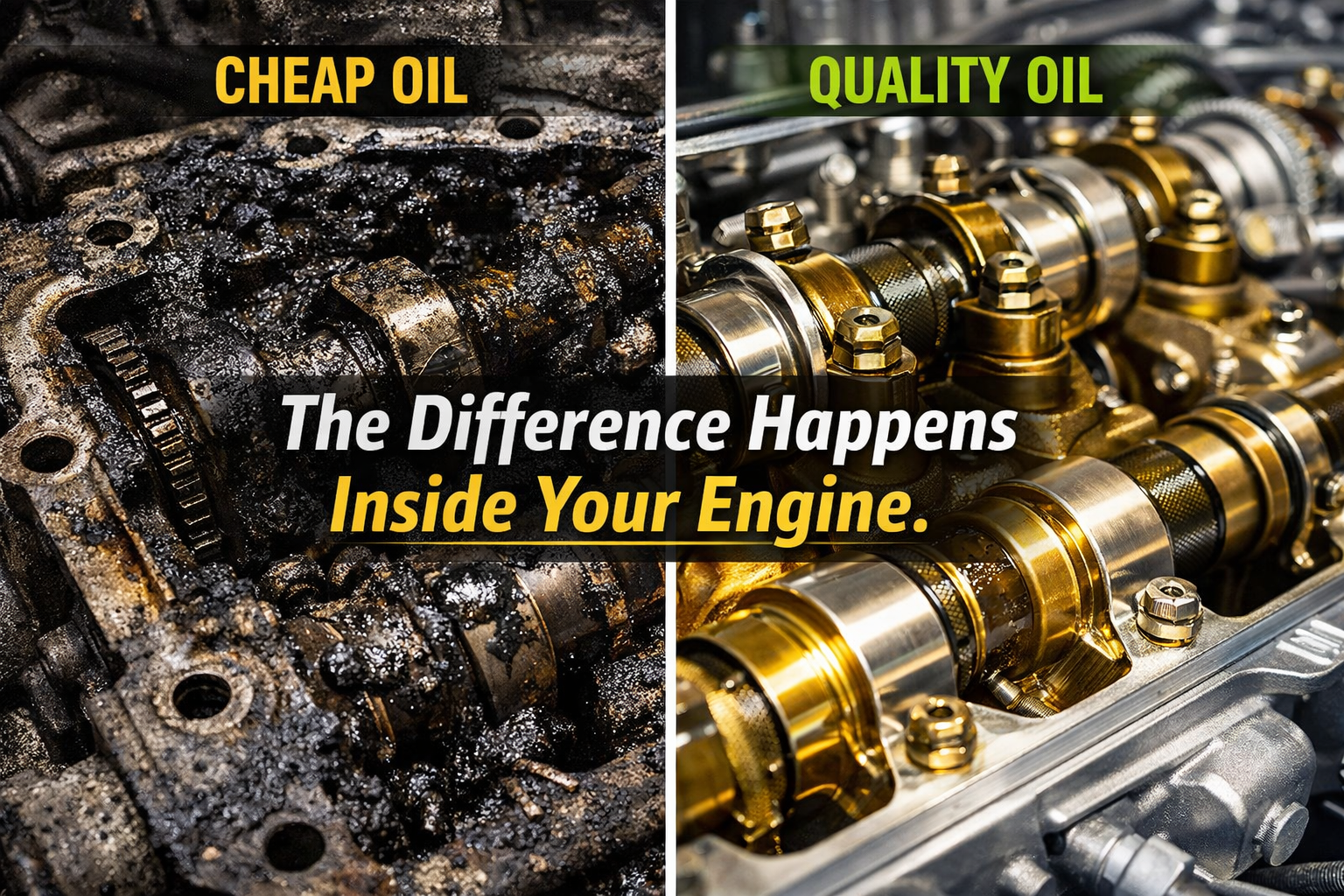
Using low-quality oils that allow sludge formation.
-
Adding incompatible aftermarket additives.
-
Confusing normal soot accumulation with engine damage.
FAQ
Q: Is black oil bad for my engine?
A: Not necessarily. Modern oils are designed to suspend soot and contaminants, which darkens the oil.
Q: How often should I change oil that turns black?
A: Follow manufacturer recommendations and monitor oil condition, not just color.
Q: Why does diesel oil darken faster than petrol oil?
A: Diesel engines produce more soot and combustion byproducts, which high-quality oil suspends.
Q: Can oil turn black too quickly?
A: Yes, if low-quality oil is used, there’s contamination, or if the additive package is depleted.
Internal Linking
Previous articles:
Week 1
Ultimate Guide to Engine Oil
Week 2
What Does Oil Viscosity Mean
Week 3
Synthetic vs Mineral Oil
Week 4
Why Engine Oil Turns Black
Week 5
Why Cheap Oil Costs More
Week 6
Diesel Engine Oil Specifications
Week 8
Why Engine Oil Breaks Down Over Time
Week 9
How Often Should You Change Your Engine Oil?
Week 10