
The Complete Guide to Engine Oil (2025 Edition)
Unlocking Engine Performance, Protection & Survival
Most people spend more time choosing a coffee than the oil protecting their engine.
Think about that.
Inside every running engine:
- metal surfaces slam together thousands of times per minute
- combustion temperatures exceed 2,000°C
- bearings ride on microscopic oil films thinner than a human hair
- pistons reverse direction hundreds of times every second
- turbochargers spin faster than most jet turbines
And through all of that controlled mechanical violence…
one thing keeps the entire system alive:
The oil.
Not the badge on the rocker cover.
Not the horsepower number.
Not the size of the turbo.
The oil.
Yet despite being one of the most important components in any engine, lubrication remains massively misunderstood.
Many drivers still believe:
- “oil is oil”
- “brand doesn’t matter”
- “cheap oil changed often is fine”
- “black oil means it’s worn out”
- “all synthetics are the same”
None of those beliefs survive real-world mechanical stress.
This guide breaks down:
- how engine oil actually works
- what viscosity really means
- why additives matter
- how oils fail under heat and load
- why premium oils outperform cheaper alternatives
- and what truly separates high-performance lubricants from mass-produced compromises
Because once you understand what’s happening inside your engine…
you’ll never look at engine oil the same way again.
Table of Contents
- Why Engine Oil Matters
- What Does Oil Viscosity Mean?
- Synthetic vs Mineral Oil
- Why Engine Oil Turns Black
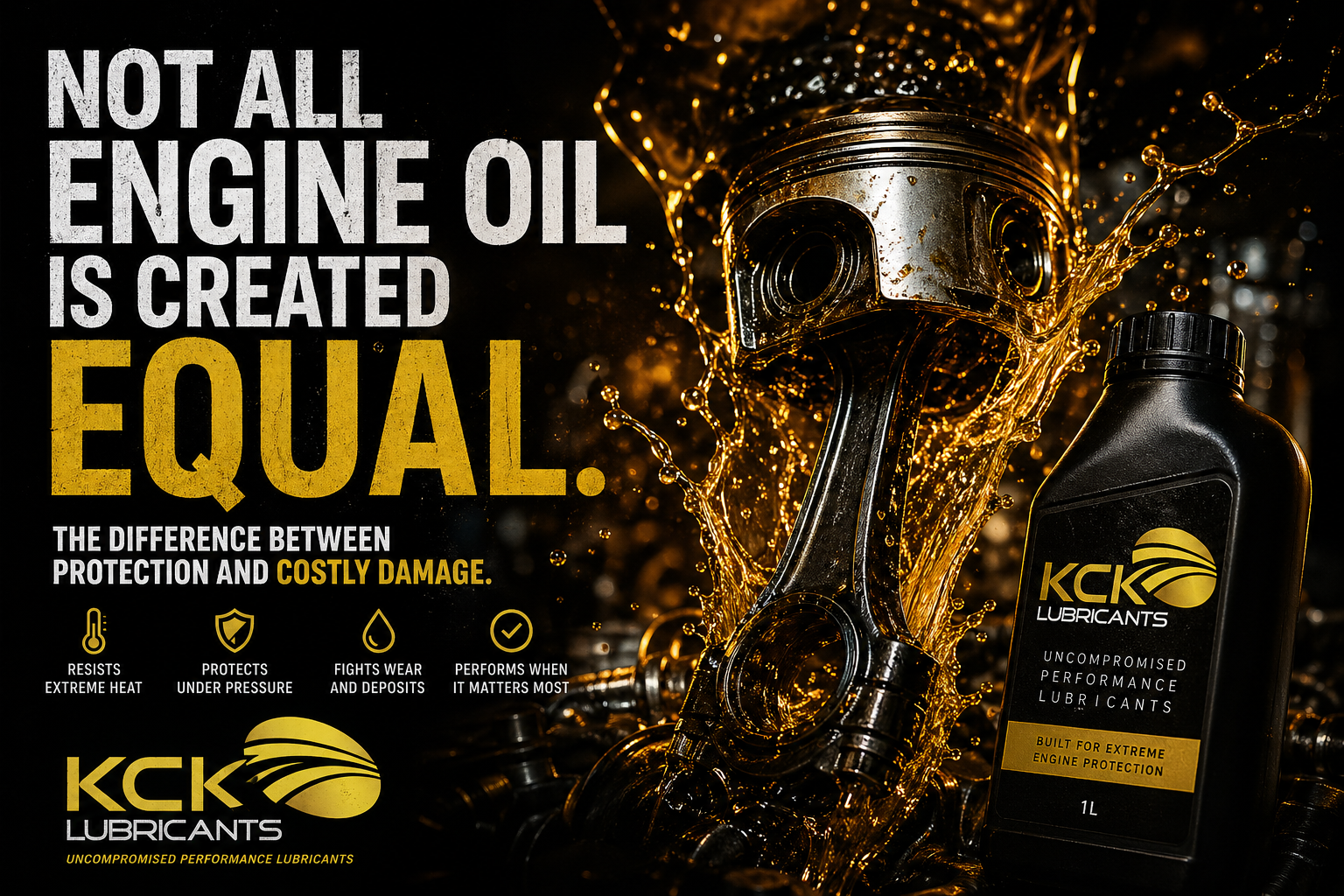
- Why Cheap Oil Costs More
- Diesel Oil Specifications Explained
- Oil Additives: How They Work
- High-Temperature Oil Performance
- Oil Change Intervals & Maintenance
- What Makes High-Performance Engine Oil Different
- What Happens When Engine Oil Fails?
- KCK Lubricants: The Real-World Difference
1. Why Engine Oil Matters
Without oil, an engine dies in minutes.
Not eventually.
Not “over time.”
Minutes.
Because inside every engine:
- crankshafts spin at enormous speed
- pistons accelerate and reverse direction violently
- bearings operate under immense load
- valvetrain components hammer against each other thousands of times every minute
And none of those components are meant to touch directly.
The only thing separating those metal surfaces is a microscopic oil film.
Once that film fails:
wear accelerates instantly.
Modern engine oil performs far more functions than simply “lubricating.”
It must:
✅ reduce friction
✅ control heat
✅ suspend contaminants
✅ prevent corrosion
✅ maintain hydraulic stability
✅ resist oxidation
✅ control sludge and deposits
✅ survive mechanical shear forces
✅ protect under extreme pressure
And it has to do all of that:
every second the engine operates.
That’s not simple lubrication.
That’s advanced chemical engineering under brutal mechanical conditions.
2. What Does Oil Viscosity Mean?
Viscosity refers to an oil’s resistance to flow.
In simple terms:
it describes how thick or thin the oil is under different temperatures and operating conditions.
Maintaining proper viscosity is critical because engine oil must:
- flow quickly during cold starts
- maintain film strength at high temperatures
- resist thinning under load
- continue protecting moving components under extreme stress
Understanding Multi-Grade Oils
Modern oils are commonly classified as multi-grade oils, such as:
- 5W-30
- 10W-40
- 15W-50
The first number represents cold-flow performance.
The second number represents viscosity at operating temperature.
This allows oil to remain:
✅ fluid during cold starts
✅ stable once the engine reaches temperature
Why Viscosity Stability Matters
At high RPM and heavy load, oil is exposed to enormous mechanical stress.
This stress can physically damage viscosity modifiers within the oil — a process known as:
viscosity shear.
Cheaper oils often lose viscosity stability more rapidly under these conditions.
As viscosity drops:
- oil film strength weakens
- bearing protection decreases
- wear accelerates
High-performance oils are specifically engineered to resist viscosity shear and maintain protection under extreme operating conditions.
3. Synthetic vs Mineral Oil
Not all base oils are created equal.
The foundation of every engine oil is the base stock used during formulation.
And this is one of the biggest differences between ordinary oils and premium lubricants.
Mineral Oil
Mineral oils are refined from crude oil.
They provide basic lubrication performance and remain widely used in older or low-demand applications.
However, mineral oils are generally:
- less thermally stable
- more prone to oxidation
- less resistant to volatility
- less consistent at extreme temperatures
Synthetic Oil
Synthetic oils use highly refined or chemically engineered base stocks designed for superior performance.
These oils provide:
✅ improved thermal stability
✅ stronger oxidation resistance
✅ reduced volatility
✅ cleaner operation
✅ more stable viscosity under stress
This is particularly important in:
- turbocharged engines
- motorsport applications
- high-performance street cars
- heavy-duty diesel environments
Where temperatures and loads can become extreme very quickly.
Why Synthetic Oils Perform Better
Synthetic molecules are engineered for consistency.
This allows them to:
- tolerate higher temperatures
- resist breakdown longer
- maintain stronger oil films
- reduce deposit formation
In demanding engines, this additional stability can dramatically improve:
- engine cleanliness
- wear protection
- long-term reliability
4. Why Engine Oil Turns Black
One of the biggest myths in the automotive world is:
“black oil means bad oil.”
In reality:
dark oil is often a sign the detergent system is doing its job properly.
Modern oils contain detergents and dispersants designed to:
- suspend soot
- capture contaminants
- prevent sludge accumulation
- keep internal engine surfaces clean
As contaminants are suspended within the oil:
the oil naturally darkens.
This is especially common in:
- diesel engines
- direct injection engines
- turbocharged applications
What Actually Indicates Oil Breakdown?
Oil colour alone tells you very little about actual lubricant condition.
Real oil degradation involves:
- oxidation
- additive depletion
- viscosity breakdown
- thermal stress
- fuel dilution
- contamination
These changes often occur long before visible colour changes become obvious.
That’s why oil analysis is far more accurate than appearance alone.
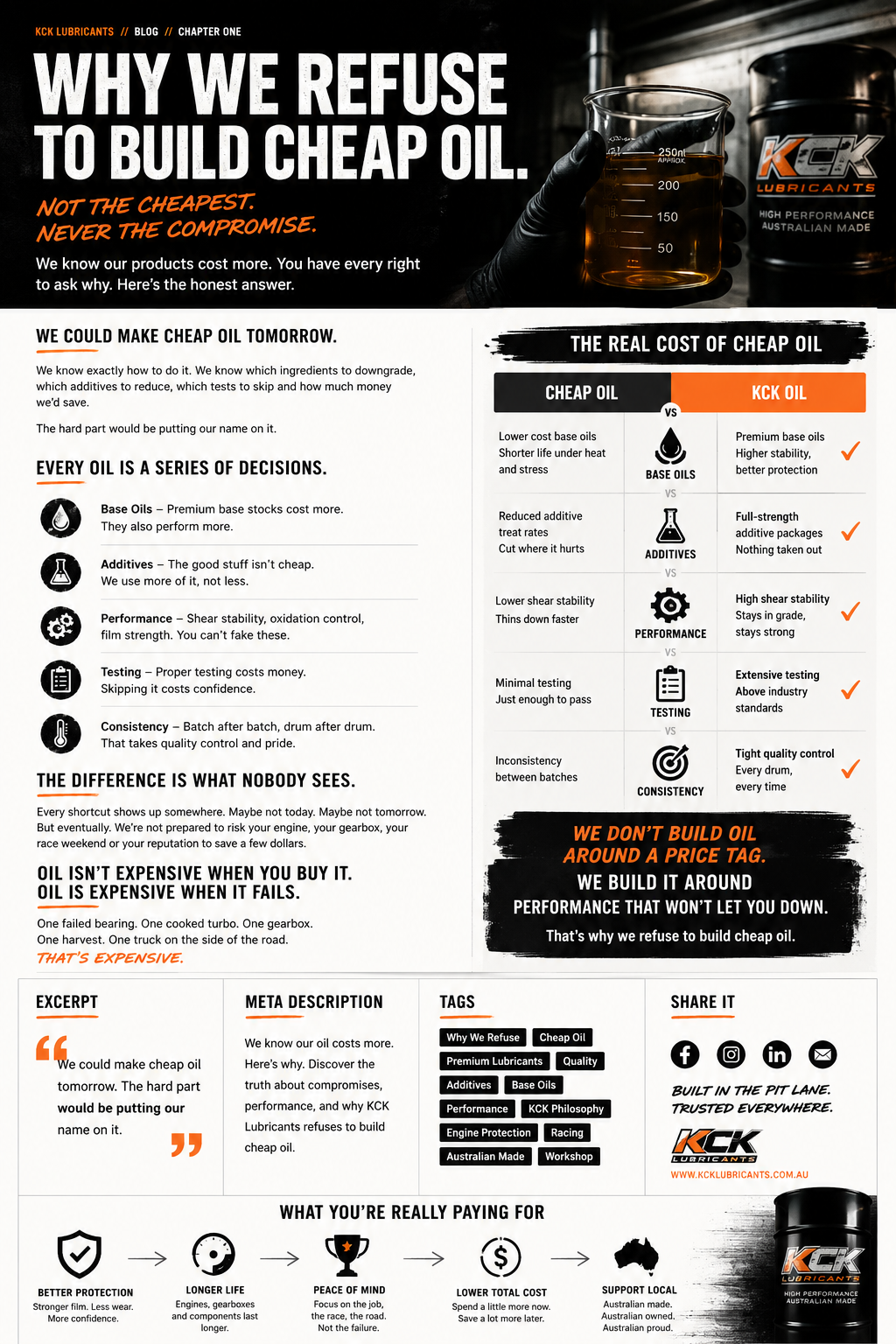
5. Why Cheap Oil Costs More
Cheap oil is one of the most expensive shortcuts you can take with an engine.
Because while inferior oils may:
- look similar
- share viscosity grades
- technically meet minimum standards
…the difference appears once engines are exposed to:
- heat
- RPM
- load
- time
This is where lower-quality formulations begin to fail.
Where Cheap Oils Cut Corners
To reduce manufacturing costs, cheaper oils often use:
❌ lower-quality base stocks
❌ weaker additive packages
❌ reduced detergent concentrations
❌ lower oxidation resistance
❌ poorer viscosity stability
The consequences compound over time:
- increased wear
- sludge accumulation
- varnish deposits
- unstable oil pressure
- increased oil consumption
- shorter turbo life
Cheap oil rarely destroys an engine overnight.
It simply helps it die younger.
6. Diesel Oil Specifications Explained
Modern diesel engines place enormous stress on lubricants.
High cylinder pressures, turbocharger temperatures, soot contamination, and long operating hours all demand extremely robust oil formulations.
Common Diesel Specifications
API CK-4
Designed for modern heavy-duty diesel engines requiring:
- soot control
- oxidation resistance
- wear protection
- extended drain capability
ACEA E7 / E11
European standards focused on:
- high-load durability
- deposit control
- thermal stability
- long service life
OEM Approvals
Manufacturers such as:
- Cummins
- Caterpillar
- Volvo
- Detroit Diesel
…often specify additional performance requirements for warranty compliance and durability.
Why Diesel Oils Matter So Much
Diesel engines generate:
- higher combustion pressures
- more soot contamination
- greater sustained load
This means oil quality becomes even more critical for:
- ring protection
- turbocharger life
- bearing durability
- engine cleanliness
KCK diesel lubricants are formulated specifically for these harsh operating environments.
7. Oil Additives: How They Work
Modern engine oils are far more than refined base oil.
Additive chemistry is what transforms oil from a simple lubricant into a complete engine protection system.
Key Additives Inside Modern Oils
Detergents & Dispersants
Help:
- suspend contaminants
- prevent sludge
- keep pistons and ring lands clean
Anti-Wear Additives
Form microscopic protective films on metal surfaces to reduce wear under extreme pressure.
Antioxidants
Slow chemical breakdown caused by heat and oxygen exposure.
Corrosion Inhibitors
Protect internal components from moisture and acid formation.
Friction Modifiers
Reduce internal drag and improve efficiency.
Why Additive Quality Matters
Additives are consumed over time.
As they deplete:
- protection weakens
- oxidation accelerates
- deposits increase
- wear protection declines
This is one of the biggest differences between premium oils and budget formulations:
additive quality and longevity.
8. High-Temperature Oil Performance
Heat is the enemy of every engine oil.
And modern engines generate enormous amounts of it.
Combustion temperatures can exceed:
2,000°C
Turbochargers glow red-hot under load.
Bearings experience constant frictional stress.
Pistons absorb enormous combustion heat every power stroke.
And much of that heat ends up in the oil.
What Happens When Oil Gets Too Hot?
Inferior oils begin suffering:
- oxidation
- viscosity loss
- thermal degradation
- additive depletion
- increased volatility
As oil degrades:
film strength weakens.
And once film strength drops:
- metal contact increases
- friction rises
- temperatures climb further
- wear accelerates rapidly
Oxidation: The Silent Killer
High temperatures trigger oxidation reactions inside the oil.
This causes:
- sludge formation
- varnish deposits
- acid formation
- thickening
- reduced lubrication efficiency
Premium synthetic oils resist oxidation significantly better due to:
✅ superior molecular stability
✅ advanced additive systems
✅ higher-quality base stocks
This is one of the biggest reasons premium oils survive where cheaper oils fail.
9. Oil Change Intervals & Maintenance
The old “3,000-mile oil change rule” is largely outdated.
Modern synthetic lubricants and modern engine technology allow significantly longer service intervals when:
- correct oils are used
- manufacturers recommendations are followed
- driving conditions are considered
Severe Conditions Still Matter
Heavy towing, short trips, motorsport use, extreme heat, and stop-start driving can accelerate oil degradation dramatically.
These conditions increase:
- oxidation
- contamination
- thermal stress
- fuel dilution
Even premium oils eventually degrade.
Maintenance still matters.
What Happens When Oil Changes Are Ignored?
Neglected oil changes can lead to:
❌ sludge accumulation
❌ reduced fuel efficiency
❌ increased wear
❌ unstable oil pressure
❌ excessive deposits
❌ catastrophic engine damage
Regular maintenance remains one of the cheapest forms of engine insurance available.
10. What Makes High-Performance Engine Oil Different?
High-performance engine oils are engineered specifically for extreme environments.
This includes:
- motorsport
- turbocharged engines
- high-load diesel applications
- endurance use
- severe heat conditions
Key Differences Include:
Advanced Base Oils
Provide:
- stronger thermal resistance
- improved oxidation stability
- lower volatility
Robust Additive Packages
Deliver:
- improved anti-wear protection
- stronger detergency
- greater deposit control
Superior Shear Stability
Maintains protective viscosity under high RPM and heavy load.
Enhanced Film Strength
Critical for:
- bearings
- camshafts
- turbochargers
- high-load valvetrain components
At extreme RPM and temperature:
ordinary oil simply cannot maintain the same level of protection.
11. What Happens When Engine Oil Fails?
When lubrication breaks down, engine damage accelerates extremely quickly.
Oil failure can lead to:
- bearing wear
- piston scuffing
- camshaft damage
- turbocharger failure
- ring wear
- overheating
- sludge accumulation
- oil starvation
And often:
drivers don’t notice until serious damage has already occurred.
Because lubrication failure is usually gradual before it becomes catastrophic.
The engine may still:
- sound healthy
- run smoothly
- make power
While microscopic wear quietly compounds internally.
This is why premium lubrication matters:
not just for performance
but for long-term engine survival.
12. KCK Lubricants: The Real-World Difference
KCK Lubricants wasn’t created to compete with supermarket shelf fillers.
It was built for engines operating in environments where:
failure actually matters.
Motorsport.
Heavy-duty diesel.
Extreme load applications.
High-temperature operation.
The kinds of conditions that expose weak oil very quickly.
Built Through Real-World Experience
KCK formulations weren’t developed in a marketing meeting.
They were shaped through:
- motorsport
- endurance testing
- harsh Australian conditions
- high-load applications
- decades of real-world mechanical experience
Because engines don’t care about marketing claims.
They care about:
- film strength
- thermal stability
- viscosity retention
- wear protection
- deposit control
The KCK Hot Blend Difference
One of the biggest differences in KCK lubricants is something most consumers never hear about:
the blending process.
KCK uses controlled hot blending technology designed to:
- fully integrate additive chemistry
- improve formulation consistency
- maximise additive stability
It’s slower.
More expensive.
Harder to do properly.
But the final product is engineered for extreme operating conditions — not minimum-cost production.
Proven Where Weak Oil Fails
KCK lubricants have been used successfully across:
- drag racing
- circuit racing
- endurance applications
- off-road competition
- heavy-duty diesel environments
These are conditions where:
weak oil gets exposed fast.
That’s why KCK focuses relentlessly on:
✅ premium base oils
✅ advanced additive systems
✅ superior viscosity stability
✅ real-world durability
Because when engines are pushed hard…
“good enough” stops being good enough.
Technical Summary
High-quality engine oils protect engines through:
- viscosity stability
- additive performance
- oxidation resistance
- deposit control
- thermal durability
- film strength under load
Oil quality directly affects:
- wear rates
- engine cleanliness
- efficiency
- reliability
- long-term durability
Inferior oils may meet minimum specifications while still offering significantly lower protection under real-world operating conditions.
Myth vs Fact
Myth:
“All oils are basically the same if the viscosity matches.”
Fact:
Base oil quality, additive chemistry, thermal stability, and shear resistance dramatically affect real-world performance and engine protection.
Myth:
“Black oil means it’s worn out.”
Fact:
Oil colour alone means very little. Modern detergents intentionally suspend contaminants to keep engines clean.
Myth:
“Cheap oil changed often is just as good.”
Fact:
Inferior oils can still allow increased wear, oxidation, and deposit formation long before service intervals are reached.
Final Thought
Modern engines are engineering masterpieces.
But they operate under brutal conditions:
- extreme heat
- enormous pressure
- violent mechanical stress
- microscopic tolerances
And through all of it…
👉 the oil is expected to hold everything together.
That’s why lubrication should never be treated as an afterthought.
Because the difference between:
- clean internals and sludge
- stable protection and bearing wear
- long engine life and expensive failure
Often comes down to one decision:
What oil you choose to trust.
The Bottom Line
Horsepower gets attention.
Oil keeps it alive.
And once you understand what’s actually happening inside your engine…
👉 “cheap oil” stops sounding cheap at all.
About the Author
Matt is part of the team behind KCK Lubricants, an Australian manufacturer specialising in high-performance engine oils for motorsport, heavy-duty diesel, and extreme mechanical environments.
With more than 25 years of formulation and real-world testing experience, KCK oils are engineered to perform where reliability and protection truly matter.
Internal Linking
Previous articles:
Week 1
Ultimate Guide to Engine Oil
Week 2
What Does Oil Viscosity Mean
Week 3
Synthetic vs Mineral Oil
Week 4
Why Engine Oil Turns Black
Week 5
Why Cheap Oil Costs More
Week 6
Diesel Engine Oil Specifications
Week 8
Why Engine Oil Breaks Down Over Time
Week 9
How Often Should You Change Your Engine Oil?
Week 10